Tag Cloud      TLA      About
Tuesday, March 31, 2009

Conficker (aka Downadup, Kido) and April Fools Day

Update 4/04/09: Check out this link, which presents an "eye chart" you can use to diagnose your Conficker status. Since Conficker blocks certain security websites, this page attempts to download images from those sites; if the image doesn't show up, it indicates you may have a problem. Original post below.

The Conficker worm, sometimes called Downadup or Kido has managed to infect a large number of computers. On April 1st it's expected to mutate. Here's a blog with a good explanation. "They" say that if you've made your updates and have good virus protection, it's not going to be a problem.

Inevitably, the Microsoft scanning tools require you to use Internet Explorer.

Repeat after me: Wouldn't have this issue if I'd bought an:________
(hint: apple)
-

March Buffer Dump

Burgh Blogger Riff Raff Gregg has the new Pirates 2009 logo.

Spider with Curiously Strong Side Effects found in Whole Foods next to the Altoids.

I want one: a dual screen laptop, brought to you by the people that developed the origami-inspired butterfly keyboard.
Sunday, March 29, 2009

Excellent Pittsburgh to DC bike trip graphic

I took my first bicycle ride of the year Saturday on the Montour Trail, and although I suffered from being out of shape it was a real pleasure to be on the bike and on the trail again. The bike did real well after only a chain lube. I think I'll need a few more miles to get into a semblance of condition.

I met a rider named Mark who lives near Imperial, and while we were riding together he told me about his trip from Pittsburgh to DC, and it turns out he'd read the trip reports from our previous rides while planning his trip. It was a real boost to meet somebody that had read one of my posts and found it useful, and it was nice to have somebody to ride along with for a while.

Lawrence Walsh has an excellent article in the Sunday Post Gazette about
bicycle camping on the Great Allegheny Passage. What's great about Mr. Walsh is that he has lots of bike cred. I'd like to mention that the best thing about the single-wheeled BOB trailer shown in the photo is that when the trail degrades into double-track, the BOB trailer's single wheel follows the bicycle really nicely -- a double-wheeled trailer doesn't work.


On the GAP Yahoo Group I came across this excellent graphic of Sam & Jane's plan for a seven-day bike ride from Pittsburgh to DC. It's such an excellent chart I wanted to mention it. It combines distance, elevation, slope, towns, daily mileages, and their itinerary. When you look closely you'll see that they've (wisely) chosen to start on the trail at McKeesport, avoiding the on-road rides between SouthSide and McKeesport. I can't say enough about how well designed this is, my compliments to Mr. Menchyk.
This map poses an interesting challenge because the peak looks very steep, but when you consider the lateral scale (350 miles) and the vertical scale (less than 1/3 of a mile), it tends to give the wrong impression. For instance, from Pittsburgh to the continental divide, the elevation increases 1600 feet over 125 miles - that's mild and gentle, but it looks dramatic. I think Mr. Menchyk did a nice job of putting in lots of context and the explicit "max grade" value.

Ah, to have a bicycle in spring time.
Saturday, March 28, 2009

Unenforceable Contracts and the Economy of Trust

A fav blog brought me to Marie Cocco's blog entry, If You’re a Little Guy, a Contract Means Nothing. Excellent writing; she had me at Orwell.

I am not a lawyer (IANAL) and so I will leave the art of contract law to those professionals. But The nature of contracts in America has changed during recent (post-WW2) history and it has implications for where we go in the future.

Enforceable Contracts

A contract is an exchange of promises between two or more parties to do (or refrain from doing) an act which is enforceable in a court of law. It is a binding legal agreement. That is to say, a contract is an exchange of promises for the breach of which the law will provide a remedy. A contract requires agreement, consideration, intention, capacity, and formalities.

Why do we make contracts? Why does society define them? Because if you observe the rules, a contract is enforceable.

Bankruptcy and Assymetrically Enforceable Contracts

Cocco's article describes how, in current practice, contracts are only enforceable against the "little guys".

The practice of using bankruptcy laws to abrogate union contracts in aviation was the particular expertise of Frank Lorenzo, who ruined Texas Air, New York Air, Continental and Eastern, and left the technique of using strategic bankruptcy to void contracts as his legacy to the industry.

In Pittsburgh, USAirways made contracts with their employee unions and with the airport. Although the airline thought the contracts were a fair bargain when they entered into them, when the world and their priorities changed they felt it was a burden to honor the contracts - so they filed for bankruptcy, voided their contracts, repudiated their agreements, and left their contracting parties in the lurch.

Unenforceable Contracts

unenforceable contractThe extension of bankruptcy laws from the original concept (protection of creditors and assets) to the cancellation of contracts is an overwhelming change in our system of contract law. The result of this extension is that contracts are now asymmetrically unenforceable; the big party can play the bankruptcy card, and the little party has no significant recourse.


Used to be, when you entered into a contract for the next five years, you could reliably plan on the conditions of the contract unless there were extraordinary events (force majeure). Now, contracts with large entities are only valid as long as the entity finds it beneficial. It's a lot harder to plan in the face of such uncertainty.

Cocco points out the dialectic in our public posture on contracts. Contracts describing bonuses at AIG just had to be honored, in spite of the fact that the company was out of cash, received ma$$ive federal bailouts, and the President wanted them stopped. Contracts describing wages and benefits at GM plants for UAW members just had to be broken and rationalized in order for their jobs to exist for another year. Some contracts are enforceable, some are not, and the fickle capriciousness is unjustifiable.

Imposed Conditions as Pseduo-Contract

In the December 2008 showdown between Pittsburgh's PAT Authority and Local 85 (blog entry), the County withheld appropriated funds to contrive an artificial financial deadline, and then the Authority threatened to void the existing labor contract and impose new terms, which it referred to as a new contract. This is pure Newspeak; imposed working conditions do not meet the agreement / consideration / intention / capacity / formalities definition of a contract.

As contracts mean less, the benefits of making a contract are diminished, and the economic machine is damaged. Ask any USAirways pilot, whose retirement is gone and whose contract is gutted, how much they trust any contract or organization. Ask Captain Sullenberger.


The Economy of Trust
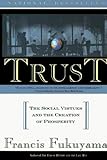


Frances Fukuyama's book, Trust: The Social Virtues and The Creation of Prosperity, talks about the role of culture and laws in establishing a culture of trust, and how prosperity and wealth increase in a society in which people and companies are comfortable undertaking risk mitigated by trust.

I think that the erosion of contract enforceability through bankruptcy laws, combined with capricious political decisions about which contracts cannot fail and which contracts must fail, reduce the culture of trust and will prevent the prosperity that depends on a culture of trust.

I take a shallow and mechanistic view of culture, and try to diagnose our maladies the way you'd troubleshoot a system. When something's not working the way it used to, I wonder: what was the point at which things changed? What was the event that set us on this new path? What changed that caused this problem?

Modern Origin of Unenforceable Contracts

When did contracts start becoming unenforceable? I believe it started way before Frank Lorenzo. I think it started when we liberalized divorce and made the marriage contract unenforceable - either party could get out easily, even if the other party objected. What could be the harm?

Sure, you had agreed to the marriage, in fact you'd sworn to specific terms -- but now you've grown as a person, you're beyond them, and so you file some forms and you're out of it, regardless of the other party's desire to keep the marriage contract together. Marriage was the first generally unenforceable contract in modern times, and now the concept is rippling through the rest of the economy.


A Pox Upon Their House

The dark part of me races to harsh thoughts, and I wonder about all the Captains Wannabees of Industry and Management who break contracts as a technique instead of working at their committments the old-fashioned way. I wonder what they do if they go home and the spouse says, I want to dissolve our marriage contract, it's not working for me anymore, you're not the MBA I married. I wonder if they say things like, "I trusted you. We had a deal. I've given you the best years of my life. I built you a midfield terminal house, and now I'll still have to pay it off and get no benefit from it."

I wonder if they'd appreciate the irony.
Friday, March 27, 2009

The Econalypse / Depression 2.0 and Kant's Categorical Imperative

In an earlier post I identified a few key drivers that lead to the Econalypse of 2009-2011 aka Depression 2.0: Maria distributed a list of companies about to close but still selling gift cards; I distributed that list very widely to make sure that I wasn't given any bum cards; and I took the few dollars remaining in my 401K out of the stock market.

Each of those actions, taken alone, made sense to me. Apparently they made sense to a lot of people, because it seems like a lot of people did the same things at about the same time, especially withdrawing from the stock market and avoiding retail outlets.

Brendan Koerner's recent Wired piece suggested that Depression 2.0 was driven not by M's list, but rather by a situation where rational micro-economic steps cause negative macro-economic effects. He wrote,
This is why colleges split economics into micro and macro. Unless your name is Madoff, your individual impact on the economy is negligible. You can't spend us out of Depression 2.0 all by your lonesome. Buy the Jet Ski; don't buy the Jet Ski. Whatever.

It's only when everyone decides to put off buying a Jet Ski—a reduction in aggregate demand—that things get dicey. When we all stop spending, the economy collapses, and theoretically, without a massive Keynesian infusion of government dollars, it's just you and the zombies.

It's sort of the opposite of moral hazard, where risky behavior bears reduced personal consequences; in Koerner's explanation of good micro / bad macro, judicious individual economic behaviors produce undesirable economic consequences.

Flogging the dead horse one more time: it's okay when I avoid buying gift cards at the mall, but when everybody does it there are serious economic consequences.

Koerner's good micro/ bad macro jumped off the page for me because not only is it a succinct demonstration of micro/macro economics, it's also a very tight example of Kant's Categorical Imperative. There aren't many instances of a philosophical maxim that map directly to an economic model.

Immanuel Kant's Categorical Imperative

Immanuel Kant was a philospher who sought to build a bridge between the empiricists (knowledge comes from experience) and the rationalists (knowledge comes from reason).

Kant described his Categorical Imperative with these words: "Act only according to that maxim whereby you can at the same time will that it should become a universal law."

In other words, act only in such a way that you're willing to have (literally) everybody do the same. If you're considering cheating on your taxes, you might reflect: What would happen if everybody cheated on their taxes? Realizing there would be dire implications if everybody did it, you would refrain from cheating on your taxes. If it's not all right for everybody to do it, then the individual has a duty to refrain from that action. This is a deontological or duty-bound ethic, which is concerned with the morality of motive rather than of effects.

You Kant Do That

In application, the Categorical Imperative says that you can't (get it? Kant?) do a lot of things. It's generally not a permissive approach.

Kant would not have taken his money out of the stock market.
Kant would not have avoided the retail chains.
If every man were a Kantian, maybe we wouldn't be in Depression 2.0 now.


Wednesday, March 25, 2009

Promise of the Web in 1969


The microfiche / photograph format is true to Vannevar Bush's Memex concept.

I believe the actor is Wink Martindale. Groovy.
Tuesday, March 24, 2009

The struggle of man against power is the struggle of memory against forgetting

Milan Kundera     The Book of Laughter and Forgetting, 1979
     Milan Kundera, Czechoslovakian, born 1929.

Kundera's book tells seven short stories united by themes of power and forgetting.

The first story, based on a true event, opens with two Czechoslovakian communist leaders — Klement Gottwald and Vladimir Clementis - standing together on a snowy Prague balcony in February 1948. Clementis graciously puts his warm fur hat on Gottwald's bare head, putting a cloth hat on his own head. The two men are photographed and this becomes an iconic image of the Czechoslovakian revolution.

Four years later, Clementis is purged from the Communist Party and hanged; he is eliminated from all official records, including the now-famous photograph. All that is clearly left of Clementis in the photograph is his fur hat atop Gottwald's head.

Everybody who remembered the story saw the fur hat on Gottwald and remembered Clementis and the willingness to revise the Truth. Later, one of the characters in Kundera's novel refers to the story and says: The struggle of man against power is the struggle of memory against forgetting.

The full paragraph is:
"The first step in liquidating a people is to erase its memory. Destroy its books, its culture, its history, Then have somebody write new books, manufacture a new culture, invent a new history. Before long the nation will begin to forget what it is and what it was. The world around it will forget even faster……The struggle of man against power is the struggle of memory against forgetting."


The phenomenon is not unique to the Soviet system. I see this in my own experience. As we move more of the historical record, our personnel systems, our health records, and our financial records into digital systems, Wikis, and the Cloud, I think we are likely to see more of it rather than less of it.
Sunday, March 22, 2009

Building A Perfect World


World Builder from Bruce Branit on Vimeo.

To avoid spoiling it with my comments, I've masked them with a bit of CSS.
Please click here to make the text visible.


For anybody interested, this is the code I used to hide/display the comments:
example of Javascript & CSS technique to hide/display text
Saturday, March 21, 2009

Three Orders of Magnitude


credit at XKCD.com       More about orders of magnitude.
Friday, March 20, 2009

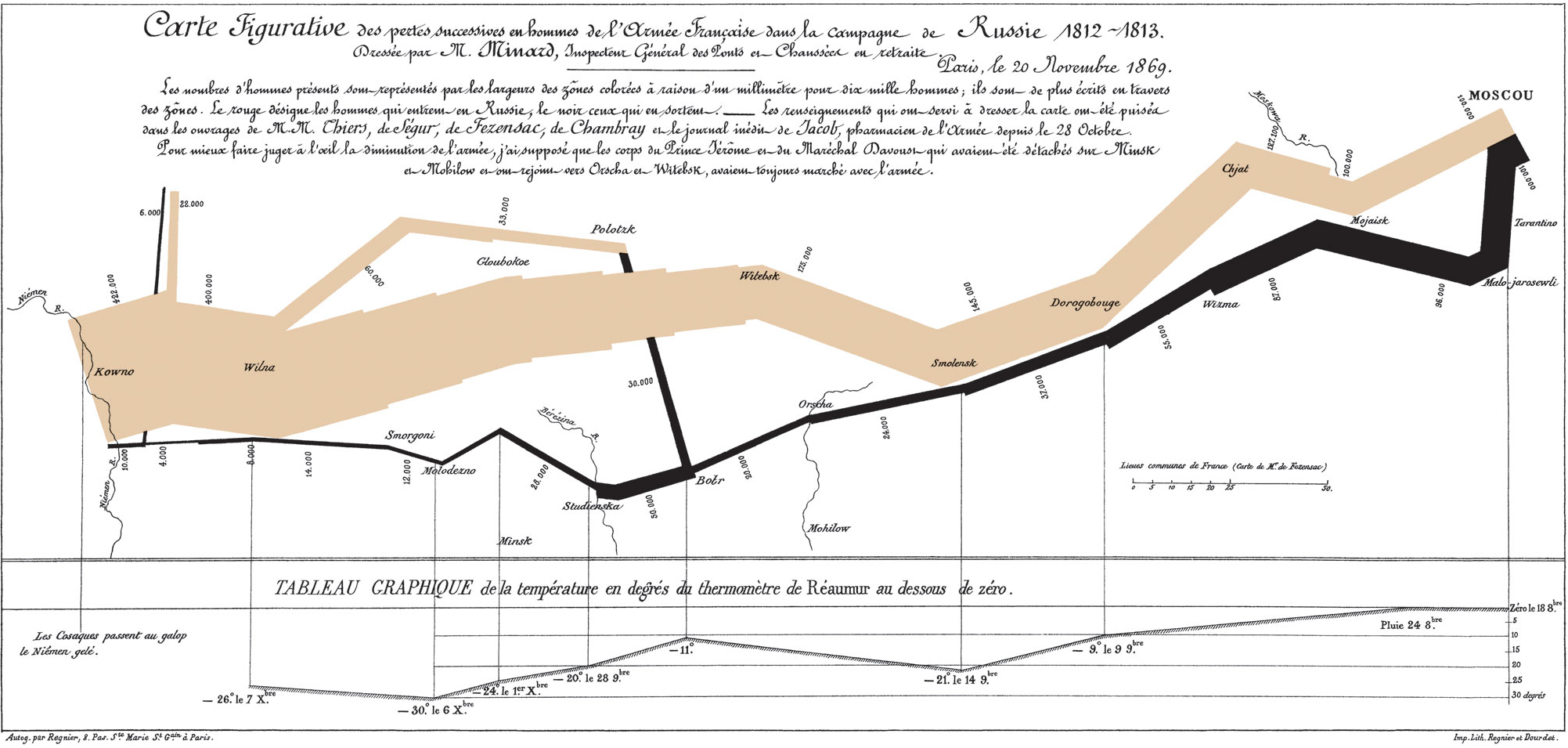
Minard's Chart of Napoleon's 1812 March to Russia : Best. Chart. Ever.

Having discussed a misleading chart in an earlier post, I'd like to write about a chart considered by many to be the best statistical chart every made: Charles Joseph Minard's chart of Napoleon's march to Moscow in his Russian campaign of 1812.


Click for larger image, opens in a new window

Beginning on the left at the Polish-Russian border, the width of the thick band shows the size of the Grande Armee at each position. The upper brown line shows the size of the army (422,000 men) as it progresses eastbound to Moscow. When the army turns around to head home, the (decreasingly wide) black ribbon shows the dwindling size of Napolean's army, which is cross-referenced to time and temperature scales. Finally, only 10,000 men return from the misadventure. The chart depicts a brutal chapter in history.

Given any time during the campaign, the chart conveys the army's direction, size, and loss relative to the start; on the retreat, the chart also conveys the timeline, position of the army, and the temperature.

From Wikipedia: Étienne-Jules Marey first called notice to this dramatic depiction of the terrible fate of Napoleon's army in the Russian campaign, saying it "defies the pen of the historian in its brutal eloquence". Edward Tufte calls it "the best statistical graphic ever drawn" and uses it as a prime example in The Visual Display of Quantitative Information. And Howard Wainer also identified this as a gem of information graphics, nominating it as the "World's Champion Graph".

I have blogged elsewhere about the notion of noticing which books a person has more than one copy of, as an indicator of the person's interests. This is a chart that I own more than one copy of, including a version from Tufte presenting the original French chart along with a recent English translation.

That the beauty, efficiency, and elegance of this chart was delivered by a human with a pen, two colors, and paper (and not anything to do with computers, chart wizards, or powerpoint) is a topic for another time.

Additional info: Tufte on Minard's sources, Minard's biography, an academic summary, and re-designs of the chart.
Wednesday, March 18, 2009

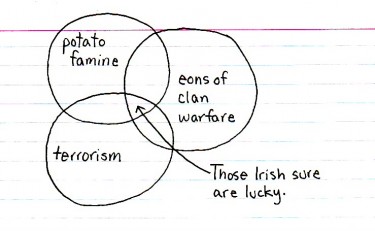
The Morning After St. Patrick's Day and the Luck of the Irish


((credit))
-

Center for American Progress Charts

I am a big fan of Edward Tufte, who is an information scientist and Yale professor. Tufte is a student of communicating (and mis-communicating) through charts. He writes about the effectiveness of charts and he critiques the effectiveness of Powerpoint. In that vein, he once testified before Congress that a factor in the launch decision leading to the Challenger disaster was a misguided reliance on Microsoft Powerpoint.

I mention Tufte because I saw a slide today from the Center for American Progress (on Der Geis's blog) that made me wish Tufte was available to critique it.

Tufte says that if we would become good communicators we must understand the techniques of willful miscommunication - for instance, to understand mass communications, the study of propagandists is informative. Tufte suggests that in visual communication nobody is better at miscommunication and misdirection than magicians, who can convince the audience through visual cues that the magician has done the impossible.

The chart I came across, from the Center for American Progress, has a bit of sleight-of-hand and I thought I'd analyze it. Here's the chart, which claims to show how different groups score on a "Progressive Index":


This chart is problematic in a few essential ways. First consider the scale of values, presented on the left and repeated below (I've rotated it to the horizontal for sake of analysis:


The scale shows a minimum value of 0 and a maximum value of 400. The two sets of crossbars are meant to communicate that the scales are discontinuous- the actual range of the displayed data is not the dramatically overbroad 0 to 400; the range of datapoints is from 160 to 247, or a range of 87 points. If charts rely on understanding specialized symbols, it's responsible to communicate the meaning to the audience rather than assume that they'll discern the meaning.

If you wanted to make a chart that communicated accurately, you'd include actual values on the axis, and you'd be explicit that the scale was not continuous - and your chart might look something more like this: (changes in red)


Tufte would say that every dot on a chart, every pixel of ink should be communicating something. If a dot is not communicating something valid then it might be an obfuscation, a magician's trick of misdirection. Look at the faint blue vertical lines connecting the data points to the names of the associated groups. Those lines are completely unnecessary; the chart could be designed with the text above and below the data points, or along the bottom axis. These lines have the effect of exaggerating the perceived visual range of the data points - in fact, the sweep of the artificially extended labels conveys that the higher datapoints are actually beyond the 0 to 400 range in the margin, when the opposite is true.

The numbers associated with the datapoints are presented in a heavier font than any other data on the chart, but they needn't be; the values should be communicated by the scale on the left. What these visually heavy datapoints, artificially displaced by the faint blue vertical lines, do accomplish is to call the eye to see the shape presented below:

Wow, there's some dramatic differences in that chart! The lower range of the visually significant shape is equivalent to a value below 0 on the scale. The upper range of the visually significant shape is well above 400, and closer to the equivalent of 500 - literally off the charts.

With a continuous axis on the left, and the datapoints shown without the exaggerating lines and labels, the chart should look something like this:

Credit (revised chart using original data values from Center for American Progress)

I must admit to a bit of bad practice of my own, in presenting the chart with a left-side scale of 0 to 400. I only used the upper bound of 400 because that's the number presented in the original chart.

When comparing the two presentations of the same data, I think that some of the techniques used in the original tend to exaggerate the differences among the groups, and the redesigned chart tends to show a fairly gentle slope and relatively modest differences between groups.


Why would anybody go to this much effort other than to advance their agenda or business case; in this situation, possibly both. The nobly-named (or perhaps Orwellian-named) Center For American Progress is a DC think tank, and like all think tanks it has an agenda, an audience, and a business goal.

Tuesday, March 17, 2009

Random Faux Album Web Game

I found a web timesuck diversion and while I usually denounce such things, this one is kind of interesting. It's the Random Faux Album Game. ( example 1, example 2 )

Here's how it works:
Click here for a page of random Wikipedia article titles.
Click here for a page of random quotations.
Click here for a page of recent Flickr photos. (It may take some geeking to glomm the image).

Here's the Slightly Informal Pittsburgh Rules (SIPR) for Random Faux Albums:
1. Choose a string of sequential words from among the titles of the first six article on the Wiki page. That's your band's name.
2. Choose a string of 3 to 6 sequential words from among the first five quotations. That's the CD's title.
3. Choose one of the first six Flickr photos. That's your CD cover art work.
4. Using your band name, CD title, and cover art work, design a cover for your album.
5. Interpreting your design, art work, and the terms, build a few faux quotes (or a press release) supporting your CD release.
6. Post your results, if you'd like, at: lifelounge.com.


My First Attempt


Bernd Pischetsrieder, an East Berlin post-punk club band that repeatedly draws inspiration from the gap between the promised benefits of East-West unification and the Realpolitik of actual economic conditions, on 9th March 2009 introduces "People Like To Own Stuff", their protest of the unrealized promises of the post-Berlin Wall economy.

"die Wende", the first song, talks about the turning point in people's dissatisfaction. "3 October 90", the most industrial piece in the collection, attempts in invoke the spirit of the Wall's being destroyed with hand tools. Torchsong "Ost-West", sung by Ditmar, describes the struggle of the two regions as if between two lovers. "Ostalgie" is a paean to pre-Unification days.

Rationale for my design:
Click here to see more Random Faux Albums.
Sunday, March 15, 2009

Office Depot, Best Buy, and My Insufficient Cynicism

Insufficient Cynicism is generally not a description of myself. This week I read a story that made be feel like a naive noob.

Boing Boing reports that Office Depot personnel may tell you that a computer you want to buy is "not in stock" if you're not buying the "buyer protection plan". Also, see this story.

As RS taught me, the best part of the story is always in the comment section. In both those links, you'll see Office Depot and Best Buy employees admitting to doing this. It's not that the staff are miscreants, it's the corporate incentive policy that drives behavior.

I am that customer. When I buy a laptop I usually have specs in mind, I plan the purchase, I know which one I want. I'd go in, find a clerk, show them the website printout of what I wanted. They'd make conversation and ask, Should I explain our buyer protection plan to you? And I'd quickly say, I never buy them, Consumer Reports advises against it. Now I realize that they were asking me a screening question, and I was cheerfully disqualifying myself. Inevitably the computer's not in stock, the website is wrong, sorry.

I've walked into Best Buy so many times to buy a laptop, with money in my pocket, and walked back out again without a laptop that I've sworn off buying computers at BestBuy, it never works.

Also, Best Buy has recently confessed to deploying a misleading intranet within their stores. The customer says "I saw a lower price on the internet", the employee takes them to a kiosk, the screen looks just like the website but the sale is no longer there, the customer accepts the higher price.

Now I've relearned something I already knew: when behavior seems inexplicable, it's usually not through stupidity, it's because of a motive that you haven't discerned yet.

I really, really hate being naive.
Saturday, March 14, 2009

St. Patrick's Day is Tuesday, March 17th


I moved to Pittsburgh in 1985, and I know that by community standards I still haven't lived here long enough to qualify as being "from here". I am very pleased to live here but and yet there are still a few things I do not understand. The fundamental mystery for me is the Pittsburgh habit of rescheduling holidays.

For instance, in Pittsburgh the St. Patrick's Day parade was on Saturday March 14th, which is sometimes considering Pi Day (3.14) but which is never considered St. Patrick's Day. For most of the universe St. Patrick's day is March 17th, and that's when the non-Burgh-verse celebrates it.

The old joke goes, Does Canada have a Fourth of July?
Punchline: Sure, right between the Third and the Fifth.

In Pittsburgh the joke is, When is the Fourth of July?
Punchline: Ambridge is July2nd, Aliquippa is July5th, Moon is July 6th, etc.

Since we have 923 different local governments (county, city, borough, township, ward, school district, scout troop), we're all over the calendar. My first year here I missed the fourth of July. I called the municipal building on July 3rd to ask if there were any fireworks scheduled, and they told me "you missed the 4th, we had it two days ago".

Halloween is the same thing, celebrated on different days in different towns. I guess I should be grateful there's no black-and-gold shamrocks.

This parochial arrogance - the borough/ township will tell you when it's St. Patrick's Day, mister, never you mind - really amuses "outlanders" (ie, people from Ohio and DC). My sister calls every year to ask when Pittsburgh is celebrating Christmas; she gets a kick out of it.

I still don't get this. Maybe when I've lived here for 30 years it'll dawn on me. Maybe my children (who are from here) will understand it. I hope not.

Bonus Link: More about the Pittsburgh Shamrocks, the 1935-36 pro hockey team.
Friday, March 13, 2009

The Econalypse / Depression 2.0 Killed Broadband

Years from now, forensic economists will study terabytes of historic information trying to identify the tipping point of the Econalypse of 2009-2011; when did the economy start an irreversible slide? What single datapoint broke the camel's back? For the record: It's Maria's fault. Maria is a lady I work with. She caused Depression 2.0 ; it started with the best of intentions in October 2008.

econalypseA buddy of Maria's faxed her a list of stores still selling gift cards, even though they'd probably be closing soon. Some of the names surprised me. I made copies and passed them around; I didn't want anybody giving me no-good giftcards. Good thing I distributed that list widely.

Later that day I was reviewing my 401K and I thought, if all those businesses are folding, I should get that last bit of money out of the stock market. So I transferred my 401K money to savings bonds. I was talking with friends about what turned us to the Bear side and I think I can pretty accurately say: it was that list of Maria's.


Unexpected things happen in economic tipping points.
Used to be, the railroads were the mainstay of the economy.
Used to be, Pittsburgh made steel.
Used to be, real estate couldn't go wrong.
Used to be is no guarantee of future performance.
What would be Unexpected 2.0?

I've read about scenario planning and the way they use it at Royal Dutch/Shell. One of their techniques is to consider these questions: What's a current market assumption about something that's either plentiful/cheap or scarce/expensive? What would happen if the assumption turned out to be false?

So: what relatively recent trend is so firmly embedded in our assumptions that we can't imagine it going poof? What's new, popular, widely adopted, and we can't imagine doing without it? I suggest: high speed web access. Continual growth of high-speed web access underlies almost everybody's business strategy, The web is always becoming faster, cheaper, and more ubiquitous. It's an accepted article of faith. What would happen if that changed?

How could Depression 2.0 affect growth of domestic broadband? Suppose we have a four-year economic downturn and 13% of the country is unemployed. Suppose 30% of the country cancels their high-speed web access because it's an unwarranted luxury when next month's paycheck is uncertain?

How would the cable companies, with significant fixed costs and few variable costs, respond? They'd consolidate through M&A, raise rates, and allow cable to go dark. The ubiquitous web might be gone, and we'd be back in 1996. The people unaffected by the Econalypse will be online, but there'll be a broadband ghetto.

The pure-play businesses will suffer. The clicks-and-bricks will struggle. The bricks-and-mortars will do better. Newspapers and magazines, or any industry betting on the web for their salvation, will probably fold.

How will children do their papers without high-speed internet? Hello, public library with web access! Congratulations, banks that maintained branch offices!

All the businesses that shifted to the web-based version of customer relationships will suffer when their relationships move offline. Companies that moved their HR posture to self-serve, or that moved their information systems to the cloud, will have remote employees who can't access their key systems.

I'm just saying.
Wednesday, March 11, 2009

Lady Elaine Obamicon

Pittsburgh Blogress Lady Elaine has an Obamicon on her profile!


I didn't know. Very nice.
-

Mon Wharf Bike Trail Pittsburgh

Imagine this: you're bicycling into Pittsburgh from DC on the Great Allegheny Passage. You're riding north on the Southside Trail in Baldwin Borough, you've tried to plan a bike route to get to the fountain at the Point but however you try it, once you get to the Smithfield Street bridge the trail ends and you have to ride in streets with urban traffic for the last five blocks of your traffic-free ride from DC to Pittsburgh. You've ridden 352 miles on trails, except for those last five blocks in downtown Pittsburgh. And you're not riding a messenger's nimble fixie, you're riding a touring bike with heavy panniers loaded with gear.

That would be a mostly true report* now, but it's about to get a lot better. From the Post Gazette: Work begins on Mon Wharf trail link.
(My compliments to the artists, very nicely done)

I really appreciate the switchback ramp. It's very difficult to get a loaded touring bike up a staircase - there's a bridge in Harper's Ferry where you need to do that, and it's not very good.

This is welcome news. *There's also a trail section from McKeesport to Baldwin Borough that needs to be completed. That section is planned, approved, budgeted, and under way, with the exception of the Sandcastle property. The Sandcastle section seems likely to succeed, it'll be a negotiation between the owners and the County, probably mostly about liability.

I ride Pittsburgh-to-DC every few years with two friends, and I really think that once the Pittsburgh end of this trail is complete, you're going to see a lot of bicycle tourism. Also, once the PIT Airport to Montour Trail connector is built, you'll see people flying into PIT and riding to DC.
Tuesday, March 10, 2009

Hey Hey it's the Wolfram ( Wolfram Alpha)

Wolfram Alpha is coming, and it might be bigger and better than Google.

Google is about search. You specify words you want to look for, and Google returns lists of webpage that include those words. Ask Jeeves claims to be about questions, but it really parses questions and then runs a search. You specify a question you'd like to ask, and Ask Jeeves returns a list of pages that may contain an answer.
Wolfram Alpha (as opposed to Beta) isn't Search; Wolfram is about Computing. When you ask Wolfram a question, it tries to compute (that is, to figure out) the answer. If they can do this, it's huge.
wolfram alpha

What's the difference between Search and Compute? Say you want to solve up a multiplication problem: What is 6 times 8? If you solution is Search-based, you find a chart of multiplication values, you look up 6 times 8, and your return a list of places to probably find results to the user. It's a solution, but it's not a very elegant solution. Compute says, figure out how to solve multiplication questions, and work the process, and calculate the result - give the user the answer.

If your "need" is 6x8, Search is adequate. If your need is 123456 x 987653, then Search is inadequate and Compute is the solution to your need. Google is a search engine; Wolfram is a knowledge engine.

This is the stuff of what computers promised to be fifty years ago (Hello, Vannevar! We're getting closer to 1950!) when the thought was, you could go up to a computer and ask, "What is the current phase of the moon", "What is the atomic weight of hydrogen", and the computer would actually answer the question. The key point is it's not a database of answers to all possible questions - it's a system of symbolic processes that solve questions expressed in language.

If what you want is to find a "Pittsburgh metric widget shop", then Search and Google will meet your need. But if what you want is an answer to a question - who won the battle of Waterloo?, then Compute and Wolfram may be the better tool. Why? Because if you're starting off with a question, rather than a need to find a list of locations, what you really want is an answer.

Stephen WolframStephen Wolfram (blog) earned Ph.D. in theoretical physics from Caltech in 1979 when he was 20. In 1988 he launched Mathematica, powerful computational and visualization software that has become the gold standard in its field. In 2002, Wolfram produced a 1,280-page monster of a book, A New Kind of Science (NKS), based on a decade of exploration in cellular automata and complex systems. Wired profile of S.Wolfram


Having said all that - and I believe Wolfram is a genius, and he hasn't failed to deliver on a promise yet, and it's likely he's got something very interesting - let me say that I also remember the pre-rollout hype for Dean Kamen's device that was going to "sweep over the world and change lives", the Segway. I'm not sure the pre-rollout hype was justified there, and we'll have to see what really happens with Wolfram Alpha.

EDIT: Segway tours in Pittsburgh are available at Station Square, I'm taking my 8th grader there in the spring. /EDIT

But the big money and the big development is not going to be in the front end that they're rolling out in May. The truly big innovation is going to be the symbolic architecture they're developed for the various bodies of knowledge, and if they're managed to design one uber-schema then it's going to be a significant intellectual achievement. If it finds general acceptance, it will have remarkable economic impact. It's significant that this is a proprietary and not an open-source project.

If nothing else, the Wolfram Alpha home page is even cleaner than Google's home page.
Monday, March 09, 2009

Obamicon of My Wii Mii

Obamicons, per the Urban Dictionary, are user-created images inspired by Shepard Fairey's iconic Obama "Hope" poster. Term coined by folks at Obamicon.Me, a website that enables users to make said images (see http://obamicon.me).


The Wii is the popular game system.
A Mii is a Wii avatar you develop that looks somewhat like yourself.
The Vannevar Obamicon (above right) is an attempt by this blogger at a personal Obamicon.


Other links:
Online Mii generator, take a screenshot to save the image.
These folks will turn a photo into a Mii for $10.

Update (4/07/09)