Showing posts with label PAT. Show all posts
March 28, 2009

Unenforceable Contracts and the Economy of Trust

A fav blog brought me to Marie Cocco's blog entry, If You’re a Little Guy, a Contract Means Nothing. Excellent writing; she had me at Orwell.

I am not a lawyer (IANAL) and so I will leave the art of contract law to those professionals. But The nature of contracts in America has changed during recent (post-WW2) history and it has implications for where we go in the future.

Enforceable Contracts

A contract is an exchange of promises between two or more parties to do (or refrain from doing) an act which is enforceable in a court of law. It is a binding legal agreement. That is to say, a contract is an exchange of promises for the breach of which the law will provide a remedy. A contract requires agreement, consideration, intention, capacity, and formalities.

Why do we make contracts? Why does society define them? Because if you observe the rules, a contract is enforceable.

Bankruptcy and Assymetrically Enforceable Contracts

Cocco's article describes how, in current practice, contracts are only enforceable against the "little guys".

The practice of using bankruptcy laws to abrogate union contracts in aviation was the particular expertise of Frank Lorenzo, who ruined Texas Air, New York Air, Continental and Eastern, and left the technique of using strategic bankruptcy to void contracts as his legacy to the industry.

In Pittsburgh, USAirways made contracts with their employee unions and with the airport. Although the airline thought the contracts were a fair bargain when they entered into them, when the world and their priorities changed they felt it was a burden to honor the contracts - so they filed for bankruptcy, voided their contracts, repudiated their agreements, and left their contracting parties in the lurch.

Unenforceable Contracts

unenforceable contractThe extension of bankruptcy laws from the original concept (protection of creditors and assets) to the cancellation of contracts is an overwhelming change in our system of contract law. The result of this extension is that contracts are now asymmetrically unenforceable; the big party can play the bankruptcy card, and the little party has no significant recourse.


Used to be, when you entered into a contract for the next five years, you could reliably plan on the conditions of the contract unless there were extraordinary events (force majeure). Now, contracts with large entities are only valid as long as the entity finds it beneficial. It's a lot harder to plan in the face of such uncertainty.

Cocco points out the dialectic in our public posture on contracts. Contracts describing bonuses at AIG just had to be honored, in spite of the fact that the company was out of cash, received ma$$ive federal bailouts, and the President wanted them stopped. Contracts describing wages and benefits at GM plants for UAW members just had to be broken and rationalized in order for their jobs to exist for another year. Some contracts are enforceable, some are not, and the fickle capriciousness is unjustifiable.

Imposed Conditions as Pseduo-Contract

In the December 2008 showdown between Pittsburgh's PAT Authority and Local 85 (blog entry), the County withheld appropriated funds to contrive an artificial financial deadline, and then the Authority threatened to void the existing labor contract and impose new terms, which it referred to as a new contract. This is pure Newspeak; imposed working conditions do not meet the agreement / consideration / intention / capacity / formalities definition of a contract.

As contracts mean less, the benefits of making a contract are diminished, and the economic machine is damaged. Ask any USAirways pilot, whose retirement is gone and whose contract is gutted, how much they trust any contract or organization. Ask Captain Sullenberger.


The Economy of Trust
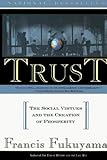


Frances Fukuyama's book, Trust: The Social Virtues and The Creation of Prosperity, talks about the role of culture and laws in establishing a culture of trust, and how prosperity and wealth increase in a society in which people and companies are comfortable undertaking risk mitigated by trust.

I think that the erosion of contract enforceability through bankruptcy laws, combined with capricious political decisions about which contracts cannot fail and which contracts must fail, reduce the culture of trust and will prevent the prosperity that depends on a culture of trust.

I take a shallow and mechanistic view of culture, and try to diagnose our maladies the way you'd troubleshoot a system. When something's not working the way it used to, I wonder: what was the point at which things changed? What was the event that set us on this new path? What changed that caused this problem?

Modern Origin of Unenforceable Contracts

When did contracts start becoming unenforceable? I believe it started way before Frank Lorenzo. I think it started when we liberalized divorce and made the marriage contract unenforceable - either party could get out easily, even if the other party objected. What could be the harm?

Sure, you had agreed to the marriage, in fact you'd sworn to specific terms -- but now you've grown as a person, you're beyond them, and so you file some forms and you're out of it, regardless of the other party's desire to keep the marriage contract together. Marriage was the first generally unenforceable contract in modern times, and now the concept is rippling through the rest of the economy.


A Pox Upon Their House

The dark part of me races to harsh thoughts, and I wonder about all the Captains Wannabees of Industry and Management who break contracts as a technique instead of working at their committments the old-fashioned way. I wonder what they do if they go home and the spouse says, I want to dissolve our marriage contract, it's not working for me anymore, you're not the MBA I married. I wonder if they say things like, "I trusted you. We had a deal. I've given you the best years of my life. I built you a midfield terminal house, and now I'll still have to pay it off and get no benefit from it."

I wonder if they'd appreciate the irony.
November 23, 2008

PAT, Union Busting, and the Right to Strike

Much has and will be written about the impending labor strike against PAT by Local 85 of the Amalgamated Transit Union. The strike, if it happens, will be depicted as a heartless uncaring reckless action by a group of overpaid cossetted civil servants, abandoning their ridership to the December elements.

The fact that the strike is a response to an artificial situation contrived by County Executive Onorato will be glossed over. Onorato has been withholding money intended for PAT, and even recently returned $8M that he said PAT doesn't need. When have you heard of a Pittsburgh politician returning money?

The great thing about the attention on bus drivers is that, like any good magic trick, the sweeping broad gesture diverts the public's attention from the real stink: CEO and management compensation and retirement. Pay no attention to the man behind the curtain. Read state Auditor General Jack Wagner's quote: "Management has placed itself in an elite status and that is the main reason why the Port Authority of Allegheny County is in the financial crisis it is in today," he said.

This is really a setpeice of Allegheny County politics, but it brings into focus the labor strike -- something that was once a normal aspect of American life, and is now a discounted historical oddity, like WW2 rationing of sugar and gasoline - a relic and a curiosity. Something that used to be, not a factor in our wonderful modern lives. By the way, how is that wonderful modern economy treating your family?

Sometimes, the law says that public workers cannot strike. I grew up in a house where "blue flu" was a technique, not a disease. But the law in this situation provides for labor strikes once a process is exhausted. The process has been exhausted, and the union is entitled to strike if they choose to. It's their right. And the PR campaign is painting the PAT employees in a nefarious light for exercising their legal rights.

The County is preparing the media war for hearts and minds, with a website dedicted to presenting the County's side. It was interesting to see the two logos at the bottom of this propaganda exercise: The Allegheny Conference and the Pittsburgh Downtown Partnership are aligned with the County. Curious that PAT is using taxpayer (my) money to convince taxpayers (me) that they're right.

The Port Authority (PAT) imposed work and pay rules after they could not negotiate a ratifiable contract. Imposing terms is generally a sign of failed negotiations. The Port Authority doesn't want to be a public failure, so they're portraying the bus drivers as villains. PAT calls these imposed rules a contract, but it's not a contract; a contract is an agreement between two parties, with capacity and consideration. These are imposed terms, which is a phrase more generally associated with surrender.

Why December 1st and not November 20th or December 10th? Because that's when PAT is imposing the new conditions, busting the Union's contract. That's driving the event. But the public headline is: bad bus drivers!


The reason for the development of Unionized labor should is something that should need no explanation in Pittsburgh, but a short tour of the need for unions can be found in considering the Homestead Strike,
the West Virginia Mine War, the 1934 textile strikes, and the Haymarket Massacre. A labor strike is a tool of social justice.

The American working class became the American middle class because of the efforts of organized labor. Without the capability of striking the union has no legal, non-violent position of strength to negotiate. In this situation, the Company PAT has agreed to recognize the Union, and the Law provides for a labor strike. This is, dare I say, the American way.

No Union wants to strike. Strikes pose terrible hardships on the workers and their families. But If workers cannot strike within the legal framework, they become less than fully American workers and more like indentured servants. Without the strike, every workplace becomes WalMart.

A small example in my own experience: at Hofstra University in the 1970s, there were thirty janitors who wanted a raise. The University could have rolled over them - there's always enough struggling people to replace a janitor. But they were in a Union, a Teamsters Union, and when the Janitors went on strike the UPS deliveries didn't come, and the plumbers didn't work, and all of sudden those Janitors were pretty important to Hofstra. That's how it used to be. Now, a politician would introduce impotent Living Wage legislation that won't pass, and the Company would outsource the work, and those people would all be on the street, having been taught a lesson about their impertinence.

Unions, like any human organization, have their foibles. Where there's cash there's corruption. Leadership can become complacent and forget their mission. Overreaching can produce abuses that threaten the competitive position of the company. USW was a great union that did great things; when the contracts started providing 10 weeks vacation, or permitted a man working a double shift to sleep through the second shift, both the Company and the Union had lost sight of reality.

For instance, the current rule (that PAT agreed to) that says employees can only be formally warned about tardiness after 13 occasions is nuts, and it's fodder for critics. When PAT bus drivers allocate Overtime through Seniority, and Overtime is used in retirement calculations, and drivers work incredible OT their last year, that's an abuse. The income in the last year isn't representative of the career. That's an example of the Company PAT agreeing to terms it should have resisted.

Is PAT accountable for the situation it's created? Is the County right in intentionally and artificially withholding PAT's money so they can contrive a financial crisis? Is that bargaining in good faith or union busting?

George Orwell would be amused to see a Pittsburgh politician busting unions and wrapping himself in the people's cause while doing it.

Links to some related items: