Career planning was easier when the life expectancy was 42. You worked as a kid, you moved into somewhat better-paying jobs, you probably stayed in one field unless you were thrown out of it, at 38 you were diseased or maimed, and at 42 you died. Not a lot of room for strategic planning; survival was tricky enough.
Now we live longer, way longer. 70 years (even 80 years for women) is not unusual. Back in the old social compact you had one career in your short life expectancy. In the new economy with the new life expectancy it's extremely unlikely for one career to cover the years. We need a new career strategy.
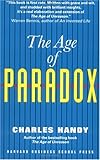

In nature and in life there are cycles. For instance, in the economy there's a business cycle - periods of growth, periods of decline, booms and busts. Charles Handy says there are cycles or curves in life and in business. He refers to a "
Sigmoid Curve" of low growth, steady growth, wealth and success, and decline.
The best short read on this may be the Google Books excerpt of the Encyclopedia of Leadership,
pages 73 to 75. The title is:
"The Sigmoid Curve: Anticipated and Preparing for Change Despite Current Success". Also, see The Toolbox for Change,
pages 23-27.

The Sigmoid Curve is an expression of success over time. The success can be measured in terms of profit, money, power, influence. The object considered can be a country, a society, an individual, or a career. In this discussion, I'm going to consider the Sigmoid Curve of Career Success over a person's lifetime. (
credit)

When a person starts in a career, their productivity and effectivess is usually negative, and it often gets worse before it gets better. There's an initial loss to the company (salary without revenue) and to the individual (education, clothes, relocation, etc).

After a while, the learning curve reduces, the person figures out how to succeed, and "success" (however measured) increases dramatically.

Given the initial loss or investment in a new employee, the break-even point of a new hire is the point at which the area of the pink triangle below the curve equals the area of the shaded "loss" above the curve.
The region of "increasing" success can be drawn, and if you note the slope of the curve as it moves from left to right, you'll see a mid-range inflection point in the slope of the curve.

The region of "increase" can be split into two significant sections at the inflection point; the two sections represent "growth" and "maturity". During the growth period, success increases at an increasing rate, and in the maturity period success grows in real terms but at a decreasing rate.

This chart indicates the characteristics of the person and the person's situation during the growth and maturity stages. (
credit)

What does up must come down, or it least it probably will, and the sigmoid curve of this career ends in decline.

Research and experience suggest that the person receives positive feedback throughout the level-off, ambiguous signals at initial decline, and negative messages only when the nose-dive has begun. The person will not be warned of their demise until it is no longer avoidable.

We are not doomed. During the growth period, the person has many assets at their disposal - money, time, benefits, training, a network - and can use their situation to prepare for another career. (
credit)
The strategy is to jump off the about-to-decline sigmoid curve and land on the bottom of a new sigmoid curve. The "sigmoid mindset" suggests that whenever times are good, success is climbing and your required effort is somewhat reduced, it's time to heed those footsteps you should be hearing and start planning for the next thing. The new curve could be a complete redesign of your current job, or a new job, or a new company, or a new industry.
In a perfect world, you'd start preparing for the career jump just before Career-A shifts from growth into maturity, and you'd accomplish the jump to Career-B close to the time that real success in Career-A starts to decrease.
The time spent between the intersections of Career A and B (see the above chart) can be difficult and stressful. People who are invested in the present career's version of You will resist the change. Complexity and stress will be high. Those about you who see the declining rate of growth may attribute it to your new "hobby", to the extent that they know about it.
If you buy the sigmoid concept, jumping the curve is the only successful option. You can ride the declining side of the first curve, struggling gloriously and making a lot of noise, but it won't change the result.

Near as I can tell, this is where I am. I've had a wonderful ride on Career-A, and I've been preparing for quite a while for Career-B. It's a bit scary, but most of the good things are.
Companies can make the sigmoid jump by redefining their products or industry.
Countries can do this by redefining their economy (China) or realigning their alliances (Eastern Europe). I think it would be very hard for a declining
city (Pittsburgh) to find a new curve to jump on to, unless external changes serendipitiously provide the new curve.
I suspect this also has implications for other endeavors (ie, marriage) and it suggests that you've got to mutually redefine it at the 20-year point
but and that scares the hell out of me.

This sigmoid-curve-jumping is not a one-time trick; a long timeframe may call for successive sigmoid jumps. What most intrigues me about this depiction is that if you compare the segments spent in one curve with the segments spent between two curves, it looks like half the time is spent in ambiguous transition. (
credit)

Here's an interesting use of the Sigmoid Curve to demonstrate the life cycle of Web 2.0, which moves into maturity and decline as the Web jumps onto Web 3.0 - click the image for full-size, opens in a new window. (
credit)
 As a bicylist, this is awesome: any time we have a proposal for more bike racks it's a great thing. Almost anything that supports or encourages bicycle riding is beneficial: one less car, one less parking space, and it's a way for somebody to get to work.
 Here's an alternative: give a green-light to business owners sponsoring bike racks in front of their establishments, have city crews install them free, and then the businesses will get to choose whether to have a bike rack out front, and people who appreciate the bike racks will favor the businesses that took the extra step. With the Three Rivers Bike Racks from Bike-Pgh, the design invokes Pittsburgh's iconic Three Rivers, and the quiet colors blend better than garish advertising. And it'll be a Pittsburgh project rather than a San Diego startup.

 I've got a collateral duty at my day job: I'm the guy who declares, two hour delay and/or non-essentials stay home. It's got a lot of faux-angst, sort of psuedo-verklempt. Often you do (or don't do) make the call when others would have gone the other way -- I'm okay with that, that's what judgement calls are all about. It's not rocket science. (I worked on a website for NASA once, their folks would say 'actually it is rocket science', they loved saying that.)
 One of the big questions that cause PWJ (people with jobs) to pause before blogging is the absence of clear corporate policy on personal blogging. It's pretty simple when Mary in Operations has a blog about her ice hockey team, but then something happens in the media and Mary chooses to post a blog entry about TheBusiness, or about TheIndustry, or about TheProduct. Then a corporate toady googles the company name, finds Mary's blog, and all of a sudden there's uncertainty. Is Mary in trouble?
 So Mary's Boss punts to HR, and HR kicks the can over to Legal, and Legal says "no employee can make public comments about the company without prior approval". Although people at every step know Mary meant/did no harm, they worry about the message it sends. How will they stop the next blogger if they look the other way this time? It all gets very squirrely, and it teaches the culture to avoid embracing Web 2.0. Look at what Mary went through.
 I'd like to offer my notion of Social Media policy: communication policy is device-neutral and medium-independent. Doesn't matter if it's a blog, a twitter, a fax, a letter, a speech, a chat room - inappropriate is a constant.



 The goal of the book is to produce a "101" textbook for information science, just like the 101 textbooks for computer science, library science, etc. With such a book, high school seniors can take an AP-type Intro to Info Science class, hopefully leading to increased enrollment in undergraduate Information Science programs.


 For some reason, we teach our children to identify with this Steelers business in a way that they never identify with Bayer, Alcoa, Westinghouse, or any outfit that might someday employ them. Our schools have days when students wear Black And Gold™ and we indoctrinate them so they grow up to be Steelers fans, and - unless they move away to find work - our children grow up to support the taxes, subsidies, and give-aways that our politicians provide to this business. Good little Steelers fans!
 There is very little new under the sun, and this maneuver isn't new either. Juvenal used the phrase bread and circus to refer to the Roman practice of providing welfare and entertainment as a means of gaining political power through populism.

 The insane multitude of interlocking and overlapping municipalities, each well-supplied with nepotism, corruption, and incompetence makes regional progress a fantasy. This is the exact situation Micheal Heller calls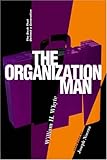
 at work because it's a cultural expectation and a condition of employment. I'm ok with that; I wore uniforms in the Navy, I can easily adhere to dress codes. Although I've always acceded to it under protest, this last week I saw that
  I've integrated the "dress meme" into my own thinking, and I'm wondering where that puts me on the Pragmatic vs. Bourgeois spectrum. I wonder if I've become "the organization man".



 When I consider how I've clearly moved into the paradigm I once rejected, I wonder if I've become that guy, as in "don't be that guy". I've taken
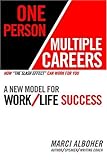
 I started reading One Person / Multiple Careers (Marci Alboher). It's time for me to admit it: I'm a slasher. You probably know some slashers. They're plumbers-slash-artists, or lawyers-slash-farmers, or pilots-slash-information architects.

 This blog's namesake,
 Posts
Posts

