Showing posts with label ATC. Show all posts
February 06, 2023

Austin disaster; JFK incursion; Memphis police: Safety Systems Gone Wrong

The headline in The Daily Mail says, "... desperate pilot landing at Austin airport tells passenger jet below it to abort takeoff because they're using the SAME runway." This is a great headline because it truly was only the Fedex crew that prevented a disaster and not the ATC system that is supposed to prevent collisions like between the landing fedEx jet and the departing Southwest jet.

Usually when these events break through to the public's awareness, an FAA spokesperson appears and says, Safety was Never Compromised. It's a cliche. This was a total system failure. These airplanes were not separated by any good fortune of serendipitious timing. The only thing preventing another Tenerife was the FedEx crew's situational awareness and the breath of god.

American aviation is a system with different parts and priorities, checks and balances, and really quite a bit of public transparency. This system, like all systems, can be studied and improved. The people who study the American ATC system have been shouting for at least twenty years that the next major airplane disaster will look like a particular scenario. This is going to be the Next Big Thing.

It looks like this: Two big jets. One of them is supposed to use a runway for takeoff or landing. The other plane will either cross or use the runway, and they collide. This is the nightmare scenario of American aviation, this is what the safety analysts tell anybody who will listen, this is the thing that keeps people awake at night.

Back in the 1980's and 1990's, the bad events in the ATC system were generally unknown outside of the facility. It was as if an information moat surrounded the tower. The controllers would walk into the Quality Assurance office, people would review and talk to make sure everybody understood the implications, and then just like any other Confessional they'd be told to do some perfunctory training as penance, and go and sin no more.

Technology progressed, the internet arrived, and now if a Tower has an event over the weekend, guaranteed on Monday morning the phone rings and Headquarters says, "Hey I'm sure you're already looking at Saturday's event with United 123, call me when you get a solid handle on it".

This Austin situation is awful. As bad as it gets without body bags. The phrase, "pink mist" which was popularized in a 1999 ATC movie to refer to the clouds of airborne body fluids is not misplaced.

Aviation these days is quite public. Various Flight Tracker websites offer the public a view of the airplanes. There are ATC radio fans who put receivers on their houses and stream the audio online at sites like LiveATC.net. The airplane transponders, which used to send position information to the radar site, now transmit really detailed info into the public realm.

So the re-enactions, the tapes, the transcripts that we see - they're all ersatz wannabees, using readily available hobbyist info of unofficial provenance to paint the picture for the public, before the government agencies are anywhere close to making a public disclosure. This is a good thing which keeps good people honest.

As in any breaking news event, we tend to focus more on what the media shows us - oooh, bright shiny object - than to what's missing. The Austin airport does not have ASDE / AMASS gear which would have rang an alarm about the occupied runway. Even though they have 767s and 737s, Congress did not see fit to authorize funds for the Austin AMASS. I bet they will now.

This brings us to the cost-justification of saving lives. JFK deserved AMASS. Austin didn't. You may have heard of a Vision Zero philosophy in eliminating vehicle-driven deaths; proponents argue that there are no cost-justified levels of acceptable death. They say, it can never be ethically acceptable that people are killed or seriously injured when moving within the transport system. There is an Austin Vision Zero program.

The Tower controller cleared Southwest for takeoff when the inbound was three miles out (roughly). Usually, in nice weather, this could work. If the controller had said, "cleared for takeoff no delay traffic two mile final", that would have been even better.

I think the buried clue is the very low visibility. You hear the Tower controller reciting RVR numbers, "runway visibility range" touchdown 1400 (feet), midfield 600 (feet), rollout 1800 (feet). That's not much at all. 600 feet is the minimum requirement for planes with special equipment and crews with special training. This is the sort of sensitive operation that invokes the concerns about 5G phones interfering with radar altimeters.

Normally in nice weather, with Southwest ready to go and Fedex three miles out, the Tower controller paints the picture - "Southwest123, cleared for immediate takeoff, landing traffic two mile final". And then Southwest hits the gas and takes it on the roll, quickly lining up on the centerline but not being very anal about it.

With an 600-foot midpoint RVR, the departing captain taxies carefully out to the centerline, makes a full slow ninety-degree turn, and really really lines up. Takes a look out the window just to check for deer or vehicles, and then gradually applies takeoff power. It's a completely different takeoff experience, and it takes a lot more time. An experienced tower controller would know that.


Armed with the same misinformation that you have, I offer these thoughts:

  • Was the controller a low-experience tower controller?
  • Has the controller ever done same runway, arrivals and departures in very low visibility before?
  • Has the controller ever sat in a jumpseat or simulator to see the different performance in different conditions?
  • Was the Cab Cordinator or Tower Supervisor position staffed?
I guess: Yes, Maybe Not, No, No.

ATC is a system, not an individual feat. So lets look at system effects:

  • The event happens at 6:47 am. Was the tower team all present? Was this a trainee and a distracted instructor?
  • Why were they arriving and departing on the same runway when parallels were available?
  • Did anybody brief the tower controller on what to expect and what to watch out for?
  • Were positions combined? Were controllers working more than one job? Were they fully staffed?


The best book I read in 2022 was, There are no Accidents by Jesse Singer. Singer argues effectively that collisions, crashes, fatalities happen because there's a rush to keep an operation moving fast, staffing is short, training is compromised, and employees are generally pressured to keep everything moving. In other words, safety is a systems issue, a management policy, and a budget decision. It's rarely an individual matter.. We call these "accidents" to normalize and de-stigmatize the events and maintain personal comfort. It's a great book; highly recommended.


There was a similar event at JFK a few weeks ago, between Delta and American. One was taking off, the other crossed the runway downfield. We hear that the ASDE / AMASS worked well. The tower controller urged the departure to cancel takeoff clearance. They stopped before hitting the crossing jet. Disaster was averted.

Let me say this: If these two events in two weeks are a trend, it's going to be a terrible year. Pete Buttigeig, who is notionally in charge and responsible, needs to get ahold of this.


And finally, we're in the media awareness timeframe for the police killing of Tyre Nichols in Memphis. Media awareness begins at the killing and ends at the funeral. Can anybody doubt that police killings are a safety issue for black Americans? Is there pressure for results, courtesy quality assurance, political influence, overtime constraints, and a code of Omerta? Of course. There is no functional civilian oversight, and people fly Blue Lives Matter flags.

Police departments are failed public safety systems. People will say, But not all cops are racists. And of course that's true. Put any group of people together and they're not a monolith.

The phrase, Not all cops.... recognizes that in fact, some cops are bad apples, prone to beating and biased against black people, and they walk around with authority and guns. And the good apples stand around and let it happen.

Michael Jackson was wrong

Would we tolerate an ATC system where "not all controllers" are bad apples, indifferent to safety? Where the good apples get busy with their coffee and scones while the rookie puts two planes together? I don't think so. But these cops are going to kill more Americans than the airport disasters.

Why do we tolerate a police system - ostensibly a public safety system - that kills more Americans than aviation does, with some cops walking around indifferent to safety? And yet we're petrified about two airplanes getting too close.

Couldn't be that the cop's victims and the passengers are from different socio-economic groups, could it?

March 03, 2012

NextGen ATC vs China, Al Queda, and Vinny and the Housewives of New Jersey


The United States has the world's most advanced and safest air navigation system. The problem with a mature successful system is for the vendors; while there's a minor upgrade every few years, the Industry really doesn't get to sell any more major new systems.

Unless they get some magic beans that will change everything. What would be an attractive list of sizzle attributes for marketing's bullet list? Reduce delays. Shorten flights. Improve the carbon footprint. (better stop there).

So they design a new system, call it NextGen ATC, and the vendors design a very, very expensive system. These magic beans are so expensive that the country will have to scrap the existing, world's-best legacy, outdated system completely and put all our future eggs in the vendor's NextGen basket. Why is the vendor's system so expensive? Where does the money go? To the Vendors, silly.

What are the vendors selling? Are they going to develop a startling new technology for their share of the public treasure? No, they're going to misappropriate leverage the GPS network. Let me say this another way: they're going to sell the public a system based on the free, existing GPS network that the public has already paid for. Wow, these guys went to some college.

GPS is the basis of Industry's NextGen bundle, because it provides a capability that Industry doesn't have to pay for or maintain. It's free; it's ubiquitious.

Unintended Consequences of Free and Ubiquitious

The problem with free and ubiquitious is that people start using it for creative secondary reasons, and those applications can bring unintended consequences to other participants.

A New York financier saw an arbitrage opportunity and invested in what he thought was an undervalued frequency spectrum. He formed a company, LightSquared (e=mc2), bought the spectrum at a bargain (from the public, btw) and attempted to exploit the space by using the spectrum for wide scale, metropolitan WiFi (the internet - another free ubiquitious thingy). (LightSquared's founder Philip Falcone is the 540th richest person in the world, the 188th richest in the United States, and is apparently too young to have read Bonfire of the Vanities.)

Unfortunately, LightSquared's use of their spectrum caused problems for everybody's GPS.
Without getting too technical, GPS uses a satellite way up high to send a teeny weeny faint radio signal to your WalMart GPS which was produced on razor-thin margins. In other words, GPS requires a cheap-as-possible device to receive and process a very faint signal. For a long time it worked, because nobody was using the adjacent spectrum.

LightSquared wanted to use the adjacent spectrum and place fairly relatively low-power transmitters all around cities (with airports) to provide MetroWiFi. Their low power tranmitters put out a much stronger signal than the far-away satellites.

LightSquared wasn't just threatening RadioShack; LightSquared was threatening everybody's use of the free/ubiquitious GPS. In particular, LightSquared pissed off the John Deere tractor company, which upsells tractors with GPS navigation, and so their Senator became very concerned about GPS integrity.

There's nothing wrong with LightSquared's technical approach. The problem is that billions of existing GPS receivers aren't shielded for interference, and aren't built to identify the legitimate satellite signal. LightSquared unintentionally exposed an essential, flawed assumption in relying on GPS.

LightSquared lost because the Homeland Security Military Industrial Complex (HSMIC) commissioned studies and wrote papers that said, Establishing low-power transmitters in LightSquared's spectrum will disable all GPS air navigation for that region. Wow. wow Wow wow Wow. wow.

We have no love for LightSquared or Falcone, who was attempting to become rich by exploiting an undervalued national asset, which is a bit like stealing from your children. It is intriguing that the HSMIC would publicly confirm that a series of low-power transmitters could disable GPS air navigation just when we're about to throw away the robust, decentralized legacy outdated system in favor of a single-point-of-failure, easily jammable pure-play GPS NextGen system.

I mean, Holy Asymmetric Warfare, Batman! Haven't we recently seen American aviation grounded by asymmetric techniques? Are we really about to decommission the existing robust, decentralized system and replace it with something that can be disabled with a few low-powered transmitters?

The Asymmetric Scenario

Here's the script: a non-state, religious-based network that's upset because we're occupying their 'stan places electronic transmitters in ten US metroplexes. The transmitters are innocuous; they look like laptop power supplies. They're programmed to turn on and off in a consistent, intermittent pattern during the day; each city's network will go active two days a month. Monday it's Newark; Tuesday it's Dallas; Wednesday is LosAngeles; Thursday is Chicago; Friday is Atlanta. Week two is Philadelphia, Boston, San Francisco, Houston, Seattle. Get the flick? They plug these devices in on the first of the month and walk away; they're in storage units, rental houses, etc. They've just shut down the domestic GPS aviation system, because the uncertainty is unacceptable.

To be fair, radio-based air navigation has always been subject to intentional, adversarial interference (MIJI). It's nothing new. The difference is that existing systems can be overcome by high-powered transmitters and those are relatively easy to find and deal with. The faint GPS signals can be thwarted by a few low-power transmitters that are very hard to find when deployed as a noisy network.

  • The early concern about switching to NextGen is: China can shoot down satellites, and NextGen requires satellites.
  • The asymmetric concern about NextGen is: a very low cost, hard to track, easily deployable grid of low-powered transmitters will render GPS unusable to aviation, and NextGen requires GPS.

I find the second issue (asymmetric vulnerability) more concerning than the first (China). But now it seems that the greatest risk of all is a guy named Vinny and the housewives of New Jersey, and the many people like them.

NextGen ATC vs Vinny & the Housewives of N.J.


Here's a story. The facts are fudged but there's truth in it; there are links to the official reports below. There's a guy named Vinny who lives in Fort Lee, New Jersey with his wife. Vinny's girlfiend lives in Passaic, which is far enough away that they're not likely to see each other in church, but close enough that he can get over there occasionally.

Vinny thinks the wife suspects something. She watches Housewives of New Jersey, which is kind of an aspirational drama for her. Vinny knows The Wife could slip a GPS tracker into his car and he'd never know it, so he seeks advice from his cousin Joey.

Joey works for a delivery company where they put GPS trackers in every vehicle to optimize efficiency - which means, keeping the guys from napping. His cousin went to Google and typed in, GPS blocker jammer and found a solution. Now on rough days Joey turns on the jammer gizmo, drives to a park and takes a nap. Fuggedaboudit.

Vinny does the same thing. He buys a personal GPS jammer and turns it on before he sneaks over to Passaic for an assignation. Unfortunately, when he drives by Newark Liberty Airport on the Turnpike, his GPS jammer blocks the GPS signal. Two pilots report the outage and it's a major snafu. The technicians come out but now everything's working fine because Vinny has moved on. At the airport people try to figure out what happened over coffee and bagels; it's hard to troubleshoot a phantom event. Fuggedaboudit.


About ninety minutes later, the pilots are reporting GPS problems again. Guess what? Vinny is going home to Fort Lee. The technicians scurry all around and chaos reigns again, but a while later everything seems fine.

Both Fox News and The Economist carried this story. The geeks are all over this; WIRED magazine's article was titled, The $30 GPS Jammer that could paralyze US Cities, and they suggest there's a lot more involved than aviation, because a lot of embedded systems use the GPS time-stamp as an essential component.

The Newark Airport has never been able to commission their public-private-partnership (PPP) Honeywell GPS ground-based augmentation system (GBAS) in spite of their great desire to do so, because between deliverymen and philandering spouses like Vinny, there's a lot of people on New Jersey highways with GPS jammers.

There is, remarkably, a public version of the official report online which details the profusion of GPS jamming devices along the New Jersey Turnpike. The report documents multiple days with multiple GPS jamming events. Vinny is Legion.

Back to Vinny. We don't know if Mrs. Vinny ever got a GPS tracker, all we know is that Vinny is a weasel scoundrel who was afraid of being discovered. He was afraid she could be a wannabe Housewife of New Jersey and buy a GPS tracker, so Vinny invested in some electronic countermeasures (ECM). (Probably, next season, the Housewives will deploy drones.)

Vinny's compromise of the Newark airport was driven by his desire to not get caught in adultery. That is a rational, non-trivial, universal motivation.

Any engineering system faces forces that would work against it. Bridges, for instance, must deal with wind and tides. If NextGen has to contend with nervous adulterers for operational reliability, it is doomed from the start. And I think that's an argument that most Congressmen could relate to.


China? Fuggedaboudit. Think about Vinny and the recent LightSquared documentation, and the wisdom of replacing the legacy system with a GPS system.

April 08, 2011

NextGen Derivative Financing: You Down With PPP?

Following up on a previous post: Recent stories in the press/web have announced a financing scheme to pay for the proposed NextGen aviation system, with a Public-Private Partnership (PPP) using federal seed money as a funds multiplier (gosh thanks, Enron!) to buy NextGen gizmos for every airline — satisfaction guaranteed.

NextGen is an industry wet-dream ISO somebody willing to pay for it.
The gizmo makers can't convince the airlines to pay for it, they can't convince the military to pay for it, and they can't convince Congress to pay for it. They can't sell it as economic stimulus, they can't sell it as infrastructure investment, and they can't sell it as a pre-need bailout.

When you can't pay for something the old fashioned way, but you're highly self-motivated to sell the product and ship it, warts and bugs features and all, you look for new ways to pay for it. If it's not right - well, what brand-new, leading edge invention is ever right in version 1.0? You don't want to by the first-year Tesla; you want to buy the fifth-year Prius. But industry wants everybody to throw out all the Prii and replace them all with Tesla 1.0's.

What's the Problem? Who's Problem is it?

Usually we spend money to solve problems. A problem is a discontinuity between expectations (subjective) and perceived reality (subjective). Problems, then, are a rather squishy phenomenon, subject to interpretation and bias. When I see problem-solving that I don't understand, I wonder: what problem are they solving? Whose problem is it?

What problem is NextGen Public-Private Partnership (PPP, or P3) financing solving? Here's my answer, yours may vary:
NextGen is industry's marketing package to sell, update, and maintain an unspecified technical project to people who cannot evaluate its merits; it is cynical rent-seeking at its essence.

The NextGen hype-bubble is getting long in the tooth. They've sold the sizzle to people unable to evaluate the claims, and they can't find anybody capable of evaluating the issue who is willing to spend their own money on it.

The problem is figuring out how to get industry the money it has been expecting out of the NextGen swindle.
The problem that NextGen Public-Private-Partnership (PPP) financing solves is moving money out of the public coffers and into the military-industrial complex under the guise of delivering NextGen aviation. The problem belongs to industry. The PPP financing solution benefits industry.


NextGen Marketing

It's been very easy for marketing to hype NextGen as all things to all people. When somebody says, I don't like ________, they say "NextGen will solve that!" When somebody asks, How come I can't do this, they say "NextGen can do that!"

Marketing tells NewYorkers it's going to eliminate delays at JFK, LGA, and EWR. Marketing tells the airlines they'll save money. Marketing tells the government they'll pay for NextGen by throwing everything else away. Marketing tells pilots they'll be in charge of their own destiny. That's all hype.

If you're industry, it's okay to sell and ship a buggy product - there's often more to be made in debugging adaptation and upgrades than there is in the original product; the trick is to get the client (Uncle Sam) to lock themselves in to the product line you're selling, because once they're committed to it there's no way they can reverse themselves, and then you own the market and you might even own the client.


What's the NextGen Guarantee "OrWhat" ?

Cynics may be making clucking sounds and asking Guaranteed? Guarantees don't mean anything without an established OrWhat. The OrWhat completes the syllogism, it defines the compensation. In other words, your satisfaction is guaranteed - or what?

  • Guaranteed Lowest Prices OR Double the Difference
  • Guaranteed Satisfaction OR complete refund
  • Guaranteed OnTime OR free upgrade

What's the OrWhat in this NextGen financing scheme? What's the deal if NextGen isn't as profitable as the gizmo-makers promise? What, what, what?

Follow the Money

Use of the Public-Private Partnership was authorized in HR 658, FAA Reauthorization and Reform Act of 2011. The PPP was not included in the original legislation, but was added by Rep. John Mica as Amendment One.

They couldn't sell NextGen with any of the several initial approaches that they tried, so they've moved into more nuanced arrangements. Remarkably, as soon as FAA Reauthorization with Mica's Amendment One passed the House, a financial boutique shop announced the establishment of the NextGenFund (logo shown).

The NextGenFund (which is a private, for-profit enterprise) will use $150 Million in federal loan guarantees to generate $1.5 Billion in NextGen purchases (this used to be called betting on the come, then it was called leverage, and now it's called a Public Private Partnership).

The federal government will guarantee the loans made by the speculators private sector. The speculators will advance money to the airlines to buy NextGen technology from industry (goal-1) at a specified interest rate (goal-2). The airlines will attempt to use the NextGen gizmos to make money (goal-3). The airlines will take that money as profits, and they'll use part of it to pay off the loans.

What if the airlines don't profit as much as the marketing hype promised? What if they don't make anything additional? What if nextGen implementation is delayed? In any of those disappointing eventualities, airline satisfaction is guaranteed, and they don't have to pay for the gizmos.

Who does pays industry for the gizmos? Who pays the profit to the speculators? That's when federal loan guarantee kicks in, and the taxpayers pay for it (goal-4).

Cui Bono?

The tone of the press coverage is notably "oh good, now we have away to pay for NextGen" and they don't seem to critically ask, "Should we spend a forture on this new technology?", "Will it deliver benefits that justify the cost?", "Who will pay for this, and who will benefit?"

What a sweet deal. Marketing overhypes a vapor-ware product that doesn't exist yet, sells it to a public that can't evaluate the promise, and if the system fails to meet airline expectations then the taxpayers have to pay for it - which was what they wanted in the first place. All of the benefits accrue to the gizmo-makers, the speculators, and the airlines. All of the costs and risks go to the taxpayers.

What are the odds this goes wrong?

NextGen promises a brand new aviation system, completely replacing the existing (tested, safe, world's best) system. There is no definition of the scope of NextGen; there is no documentation of what is (and more importantly, what isn't) included in NextGen. It's been sold as all things to all people.

Russ Chew isn't saying this is going to be easy -- but just in case, if it goes over budget, off schedule, or if it fails to deliver the marketing hype -- then the federal government will pay for it. What are the odds?

Restating the NextGenFund.com PPP Guarantee in Standard Format

Guaranteed
  • On Schedule
  • On Budget
  • Expectations Exceeded
  • Significant Savings
  OR  Uncle Sam
The taxpayers will buy it for you.

The Usual Suspects

Industry has packed the Public-Private Partnership with former government officials, a menagerie of Used-To-Be's with impressive titles. What is surprising is that when you look into the aftermath of their official tenures, there isn't any evidence of their lasting postive contribution.
  • What did Russ Chew leave better than he found it?
  • What did Marion Blakey leave better than she found it?
(Editor's Note: Point out that Republican Mica's Legislation has only passed the House. Curious that the Used-To-Be's (Chew, Blakey) were all Republican appointees. Hmm.)

Someday when you have time to watch a 14-slide presentation, check this out. Resist the urge to make sure you still have your wallet.


My compliments to the marketing team that released this PPP financing news just before all the media focus shifted over to the government shutdown. Nicely played.
April 05, 2011

Guaranteed NextGen Results . . . or it's Free!

At times this blog touches on arcane aspects of transportation policy. Previous entries have dealt with the NextGen aviation system, presented by the marketing departments solution providers of various industrial vendors as the Next Best Thing that will move aviation into the future.


Posts have included Runways as Constraints and a New York NextGen metaphor. We talked about solving the ATC Delay Problem, reframing the topic as the Airline Scheduled Delay Problem and suggesting,
The airlines and the airports have been overbooking the runways just like the airlines overbook seats on their planes. They do it because it's cost-effective; the profits go to the airlines and airports, and the costs go to the traveling public and the economy. When too many show up, they bump some back to the next hour, and so on, and so on.


In this analysis of NextGen we looked at a comparison of Costs and Benefits provided by Robert May, who is a NextGen shill advocate:

I'd like to point out that the costs exceed the benefits through at least the year 2027, in this chart prepared by somebody trying to put the best face possible on NextGen.

Just because the costs exceed the benefits doesn't mean NextGen isn't profitable; the industry will find great profit when if they can sell these gizmos. The people who pay for the gizmos, and the economy overall, will be at a net loss.

Everything I know about Nextgen and Delays

Great technology. Expensive. Not a replacement. Won't fix delays. Runways are the constraint. Airlines and airports intentionally overbook runways.


Gosh, that was easy. 152 characters, less than a text message. I don't dislike NextGen; I do have a problem with industry misleading the American public. Here's a set of recommendations for actually eliminating most airline / airport delays.

Selling the Dream

There are several challenges facing any salesman who needs to sell NextGen solutions. NextGen won't be backwards-compatible with existing, proven aviation equipment. It's as if the 1990s cellphone companies were selling phones that could call other cellphones but couldn't call landline phones. The benefits are subtle and limited; the costs are very high. Given this dog of a situation, salesmen respond with rhetoric and try to sell the sizzle, not the steak.

Whenever they can, the salesmen describe the existing system as outdated 1960's technology. As a taxpayer and passenger, I don't mind that we're using a reliable, time-tested, evolved system that's been paid for. Industry's sales pitch requires describing the status quo as hopelessly outdated.

As a species we've only been flying for a little over 100 years. To describe anything in aviation as "same old same old" is ludicrous. We've been using roads for millenia and I don't see anybody saying, "Roads? That's so 1410!"

Paying for the Dream

How does industry and their hired hands convince somebody, anybody to pay for it? How does industry move from pitching gizmos to selling the dream?

Scorched Earth

The first approach was to cost-justify the NextGen expense by claiming that it would replace all ground-based navigation systems and all ground-based radars. We could throw out all the old stuff, stop maintaining the buildings, and we wouldn't need maintenance people.

That was a good marketing pitch, and the spreadsheets ended up with usable numbers, but the reality was quite different: the Defense Department insists on maintaining the ground-based radars, the existing aircraft fleet requires a ground-based navigation system, and - by the way - the Chinese are capable of disabling satellites, NextGen is vulnerable to fifty-year solar events, and in most applications the (legacy, old, outdated) ground-based systems have lower weather minimums that NextGen. The scorched-earth value proposition didn't kick.

Economic Stimulus

The second approach to getting somebody to buy NextGen was positioning this big-ticket purchase as a new wave economic stimulus and an infrastructure investment, much in the way that we're rebuilding bridges and highways. This proposition didn't sell either.

Bailout

The third approach to getting somebody to buy NextGen was positioning it as the savior of the American airline industry; our economy needs the airlines, they're Too Big To Fail, let's bail them out and keep them operating by having the government buy the gizmos for the airlines, and for the business jets, and screw those little puddlejumpers. Instead of "first come, first served" let's talk about "best equipped, best served" - now, that's a tagline for a gizmo sale!

This was an attempt to gloss over the fact that except for a few early adopters, most airlines have decided they're not going to spend their money on NextGen; they'll accept it if somebody else buys it for them, but they're not rushing to invest in it themselves. This approach didn't succeed either, and the fact that airlines won't buy NextGen with their own money is generally understood now.

Complex Derivative Financing

Industry's newest approach to selling NextGen, which is beginning to look like a white elephant with a tattoo saying "Solution in Search of A Sucker", is to use complex derivative financing to pay for the gizmos, because the inscrutability of derivatives is socially acceptable and we're running out of ways to sell this stuff - which, again, nobody will buy with their own money.

Industry is no longer developing innovative solutions; they're now searching for innovative financing techniques to get somebody to commit to buying these gizmos. From today's Wall Street Journal, "New Way to Upgrade Air Control", (also: Bloomberg)
On Monday, ITT and Nexa Capital Partners LLC are expected to announce proposals to use about $150 million in federal loan guarantees as seed money to establish a larger, self-sustaining fund to pay for installing upgraded equipment on potentially thousands of U.S. airliners.

The goal is to help carriers fund their piece of a delay-plagued effort by the Federal Aviation Administration to create a satellite-based traffic control network.

Expected to cost more than $40 billion overall, the next-generation solution has been stymied by a persistent reluctance by airlines to invest billions of dollars to upgrade airborne devices. Now, after years of delays and futile industry lobbying for direct federal aid, ITT and its partner believe they have found the key to overcoming airline resistance.

ITT Chairman Steven Loranger has championed the loan-guarantee fund despite initial disinterest—and sometimes even hostility—from various industry players. The most unusual aspect is that airlines would gradually repay the cost of equipping planes only after they start reaping fuel and schedule benefits.

Nexa Capital's managing partner, Russell Chew, a former senior FAA and JetBlue official, said in an interview that the proposed fund is unique because it is pegged to the FAA's ability to deliver on promised benefits. If the rollout of NextGen falters due to a lack of agency or congressional support, airlines essentially would be off the hook for repaying the loans.

It might work. There's a sucker born every minute. More coming.
November 21, 2009

Hessians and Whores, Consultants and Contractors

I was not a very good student of history when I was young, and history is a lot like religion- if the last time you studied it you were in the 5th grade, then you probably are left with a 5th grader's perspective.

I first read about Hessians in 3rd grade, and here is what I remember: George Washington attacked the Hessians on Christmas morning while they were sleeping in their barracks after drinking on Christmas Eve. The Hessians were mercenaries, and the teacher explained that mercenaries were people who fought for pay; they didn't care about the issues, they just wanted to get paid. I remember thinking, stupid Hessians to get surprised like that.

When I was in 5th grade I heard about whores. I was hanging out on the corner and the older guys were referring to a whore, which their Brooklyn accent pronounced as "who-ahh". The next morning I asked my Dad, "what's a who-ahh"? He asked why I was interested, I explained, and then he said, "It's a lady who's not very nice. Leave it at that".

Sunday we went to my Aunt's house for a great big dinner - lots of relatives and kids, all in the big finished basement. I've always had a visceral dislike of screamers, and there were quite a few present. I was reflecting on how unpleasant this arrangement was, and there was an uncharacteristic silence in the roar. My Aunt started in with her shrill voice and I saw fit to announce, "Aunt ----, you are such a who-ahh."

This caused quite a commotion. I knew I needed to get out and started for the stairs, but my Dad got to me first and gave me some kinetic energy. I raced him to the front door but I had to stop to work the two locks, and he caught me and he was an instant from back-handing me when I said, "But you said..."

I am, to this day, amazed at his restraint. He put his hand down and said, "tell me exactly what you mean". And I replied, "You said whores are not-very-nice ladies, and you can hit me again but your sister is not a very nice lady!" He quietly told me to go wait in the car, and in a few minutes my family came out of the house and we went home. That night my Dad explained to me that there was more to it than he'd explained. His sister was, of course, a nice lady and a good Mom, maybe a bit loud. I thought I'd mention the story while we're on the topic.

Hessians and Whores are people that we pay to do ... essential tasks which we would normally induce others to do willingly. Relying on Hessians and Whores generally indicates that you're in a compromised, weak position, unable or unwilling to find support among your own people, so you're left to hiring mercenaries.

The Mercenary's Tale


Are mercenaries as reliable as having your own people willingly do these chores? Generally not. The role of the mercenary is not new, and neither are questions about their effectiveness and reliability. Niccolo Machiavelli dealt with mercenaries in The Prince, Chapter 12:
I wish to demonstrate further the infelicity of (mercenaries). The mercenary captains are either capable men or they are not; if they are, you cannot trust them because they always aspire to their own greatness; but if the captain is not skillful, you are ruined in the usual way.

And if you say that people will act in the same way, whether mercenary or not, I reply that when arms have to be resorted to then the prince ought to go and perform himself as the captain, and the republic has to send its own citizens. Experience has shown that princes and their people make the greatest progress, and mercenaries do nothing except damage; and it is more difficult to bring down a republic armed with its own people, than it is to bring down one armed with mercenaries. Rome and Sparta stood for many ages armed and free. The Switzers are completely armed and quite free.

And now I would discuss Italy, which has been ruled for many years by mercenaries. The first to use mercenaries was Alberigo da Conio. From the school of this man came Braccio and Sforza. After these came all the other captains who have directed the arms of Italy; and the result of all their valour has been that Italy has been overrun by Charles, robbed by Louis, ravaged by Ferdinand, and insulted by the Switzers.

The principle that has guided them has been, first, to lower the credit of infantry so that they might increase their own. They were unable to support many soldiers, so they were led to employ cavalry. Affairs were brought to such a pass that, in an army of twenty thousand soldiers, there were not to be found two thousand foot soldiers.

They did not attack towns at night, nor did the town garrisons attack encampments at night; neither would they campaign in the winter. All these things were permitted and devised by them to avoid both fatigue and dangers; thus they have brought Italy to slavery and contempt.


Mercenaries are not going to put themselves at risk for the client; their priority is (first) to look out for themselves and (second) to keep their good thing going. The only people who'll give their all for an organization (country or company) are people who have married their futures to the organization (ie, citizens, career employees).

Modernity: Consultants and Contractors


In the modern world, of course, we never use mercenaries (except for in Afghanistan and Iraq, where we use Blackwater and Halliburton). Today, rather than Hessians, organizations use Consultants and Contractors to do the things that they should rely on their own people to do.

Consultants


Consultants are generally hired by management to do something they don't understand or can't deal with. Often, the consultant is a hired gun brought in from the outside to reduce headcount, or replace the company's people with other mercenaries. The consultant's highest priority when they get inside the business is to identify their next consulting opportunity. They have completely different priorities than management, and yet often management hands over the reins to them.


Of course, when I talk about consultants I don't mean the people on consulting teams - the one or two grey-beards who understand the business, or the half-dozen fresh young graduates who make and mouth the powerpoints - I mean the corporations who pretend to be honest brokers but who are really there for the money, and for next year's money, too. If the consultant's idea doesn't work, they do a study (billable hours, of course) and discover: the fault is elsewhere! The organization is resistant to change!

Contractors

Contractors are mercenaries who are brought in to do parts of the work that the population used to do - in the work environment, they replace a portion of the workforce. Contractors will say that this allows the Company to "focus on their value-adding core competencies", but the employees that remain will tell you that it's a headcount game that replaces a full colleague with a limited contractor, who has their own priorities and expectations.

Please do not confuse what I'm saying with an ad hominem attack on individuals who work as contractors. Pursuing my "whore-metaphor", the John is the organization who has a need they cannot satisfy, and the Whore is the Contractor (the corporation) that offers to do certain things for certain prices, knowing that there's an upsell and a re-sell (and maybe a cross-sell) in the near future. The John suspends his own disbelief to convince himself that this is going to be the real thing, and becomes invested in the "good or better" narrative. The Contractor is going to take the agreed price and discover more and more needs which all must be filled, and maybe find some jewelry in the process.

I'd like to revisit Machiavelli: you're never going to get mercenaries to give you the same performance as your own self-motivated people.


Here's this week's example, all from the national news outlets: The Story Behind the Flight-Plan System Crash. At one time, the air traffic system relied on a robust, redundant series of dedicated phone lines that had backup power supplies, backup routers, etc. This 24x7, bullet-proof system was a crown jewel, and it was not inexpensive.

A Consultant suggested Uncle Sam could save money using Contractors and off-the-shelf systems. In 2001, the Bush Administration gave a Contractor (Harris) a $2.4 Billion dollar contract to run the Federal Telecommunications Infrastructure (FTI), and they're responsible for keeping the system working.

When the system went down on Nov.19th, it took hours for Harris' technician to drive out and replace the network card that caused the failure. If it hadn't been an outsourced system, it would have been fixed in minutes.

Of course, the contractors aren't taking any blame. The press releases blame the outage on old equipment, but the real blame should fall on the decision to outsource maintenance of a critical system.

If this was an in-house system, accountable people would have gotten the system back online within minutes, and there would not have been a national impact. As an outsourced system, the Contractor has a cost motivation to keep staffing trimmed, and is committed to the contract more than to the organization's mission.

Most of the nation's airline system was delayed because of a Consultant's idea and a Contractor's priorities. Neither will be held accountable. Let's pay attention before the whole business goes over to the Hessians and Whores.
November 14, 2009

Ayn Rand and ATC Facilities

I've written previously about the cult of Ayn Rand, and I've also written about the Reason Foundation's NextGen marketing campaign to invest in new technolgies by moving ATC to a Corporate model.

I'd like to, if I may, take the time to connect the dots between Ayn Rand, her disciples, and the air traffic control system. And then I'd like to wrap it into a philosophical meta-question and ask: who do you trust more, Government or Corporations? (Or perhaps, who do you distrust least?)

The United States currently has the finest aviation system, and the finest air traffic control system, in the world. It routinely accomplishes tasks that other ATC systems cannot. It handles a volume that no other system can.

The primary challenge to the existing US air traffic system (the world's finest, I'll repeat) is Corporatisation, a ten-dollar-name for moving the ATC function out of government and handing it over to Corporations. The choice of words is always critical - are you pro-abortion or pro-choice - and so the industry chooses to use soft terms like "Privatise". I'm going to refer to it as Corporatise.

The aviation-industrial complex sees a high-value-added government activity that the industry would prefer to have as their own profit center. They see that there is profit to be made (money taken out of the population), and currently nobody is taking that profit. They want it.

The industry has rented a think-tank to generate a plausible rationale for their takeover. As this blog has discussed earlier, the role of a think-tank is to generate messages (propaganda) that move the Overton window, moving things that were once unthinkable into the range of the acceptable. Think tanks do this by planting marginally extreme messages that make the previously unthinkable seem reasonable by contrast.

The ATC industry's mouthpiece is the Reason Foundation and Robert Poole. Robert Poole is the poster child of Corporatization, and the industry funnels money into him so that he will do their work. The Reason Foundation and Poole are shills, advancing the industry's message under the guise of putting America back on track.


Ayn Rand was a Hollywood novelist who wrote epic fictions of heroic individuals, bodice-ripping romance, and a marriage-free, childless future driven by amoral, selfish self-interest. She was an illegal immigrant, an atheist, and perhaps the original Cougar. (NTTAWWT). Let me be clear that I have nothing against novelists, but I wouldn't use Richard Bach to develop an essential safety system, and I wouldn't use Ayn Rand's books either.


Within Rand's worldview, government should have very few functions (defend the borders); individuals should decide what's best for themselves. For instance, Rand felt that the government shouldn't staff police departments as it gave them a monopoly on the means of legal violence; she preferred to leave it to individuals to make their own arrangements (ie,militias). Also, Rand holds that government should not establish paper currency because it's an intrusion into the private arrangements of individuals. (I'd like to know how many Randians are eschewing their government-developed flu shots on principle.)

As Whittaker Chambers said, "Since a great many of us dislike much that Miss Rand dislikes, quite as heartily as she does, many incline to take her at her word." Rand condemned so many bad things (Communism, Stalinism), you begin to think you agree with her. But when you look at what she advocates, there's often no common ground.

In this YouTube video developed by the Reason Foundation, Robert Poole explains how Ayn Rand's version of extremely limited government drives the "philosophical" justification for the Reason Foundation:


Robert Poole identifies Ayn Rand's work as the basis for the Reason Foundation's claim to legitimacy. The temptation is to regard that as a point that might be examined and discussed, and if the Reason Foundation were a true well of discourse that would be true. I believe, however, that the Reason Foundation is just a useful front, and that the sloppy Randian rhetoric provides a dense intellectual cover for their corporate takeover of an inherently government function.

I think we should keep Ayn Rand and Robert Poole out of our ATC facilities.
(Hat tip to Don Brown for the video!)
August 07, 2009

Priorities, Power and Connections:
Eliminating Delays at JFK, EWR, LGA

A Question of Priorities

I'd like to ask an existential question, if I may:
Why do we have airports at JFK, EWR, and LGA? What's their purpose?
Why do they exist?

To serve the people in the NY metro area
To serve the NY metro economy
To make money for the Port Authority of NY-NJ
To serve the greater good of global aviation

Delays, a Dirty Secret, and a Solution.

I believe that these three airports exist to serve the people and the economy of the metropolitan area. So I'd like to ask on a macro level, Who are the three airports actually serving? And on a micro level, I'd like to ask: If an opportunity to sit in a airplane at LGA, JFK, EWR is precious, limited, and in demand, who are the people sitting in those airplanes? — because from that micro answer, maybe we can work back to the macro answer.

The dirty micro secret is that not all of those passengers are trying to get into (or out of) the metropolitan area. The people who are interesting in getting into or out of the local area are called O&D (origin and destination) passengers. If the airport is overcrowded, certainly the Port Authority should emphasize O&D passengers over connections. Because the Port Authority exists to support the metro area, right?

These are 2007 numbers for the percentage of passengers at these airports who are making connections to other cities:
   JFK 31% connecting, 69% O&D
   EWR 30% connecting, 70% O&D
   LGA 13% connecting, 87% O&D
This is significant. One-third (31%) of the passengers at gridlocked Kennedy and Newark have no desire to be there; they started off in Syracuse and want to go to Miami.


If landing and takeoff slots at JFK, EWR, and LGA are a precious commodity, why should a person from Syracuse who wants to be in Miami get to jam up the New York airports?

At the macro level: Why does the Port Authority let the airlines overcrowd New York airports to provide connecting flights to people who live elsewhere? Because it's a lucrative cash-cow for the Port Authority and the airlines, and they prioritize their money over local passenger's time and comfort.

At the risk of beating an already dead horse, let me say it this way: The Port Authority is using these airports for the good of the Port Authrority and the airlines (mostly Continental and JetBlue), to the detriment of the metropolitan population. That is corrupt and un-American. Perhaps I've been naive.

Sidebar: I like how the Chinese deal with corrupt Airport officials such as Li Peiying, former head of the Beijing Port Authority. (kudos to B.!)

The 30% Solution

If you remove all connecting passengers from the Port Authority's airports, you reduce their passenger traffic by 31%, 30%, and 13% respectively. Instantly, the number of passengers fits within the airport's capacity. The only reason these airports are overscheduled is so the airlines can sell connecting flights to other cities — most notably, Continental's hub operation at Newark and JetBlue's hub at Kennedy.

If you want to dramatically improve the delay posture of EWR, LGA, and JFK next month, just prohibit the sale of connecting flights. Shazam! Problem Solved.

What About the Connecting People in Podunk and Springfield?

Before taking action, the WWVB staff always tries to consider Kant's Categorical Imperative. Would it be all right if airports everywhere shunned connecting passengers? No. So, to be morally justified, we should also offer an accommodation to meet the needs of those people who are connecting.

Fortunately, this problem has been solved before.

In 1989 the manager of the FAA Airports District Office in Orlando, Florida (Jim Sheppard) realized that the airport congestion problem was due to connecting flights at airports which were approaching their capacity with local passengers. He published a position paper that led to an article in Aviation Week magazine.

Sheppard was driven into retirement because of the politics of the situation. He is currently a senior manager at the Orlando airport, which notably has no connecting flights. The Orlando airport focuses on serving local people and the local economy, and is not interested in supporting a hub operation. There are no delays at the Orlando airport.

Sheppard argued that the key to avoiding delays in major cities was to move the connecting activity away from busy urban airports. He suggested building "connecting airports" out in the boonies, removed from metropolitan areas. He faced two problems: the airlines and airports strongly resisted his challenge to their existing dominance, and Congress was unwilling to spend the $300 million to build a major airport to evaluate the concept. His concept remains unused.

Here's Jim Sheppard's definition of the problem and proposed solution, from his website.

Economic developments in the last five years have made testing Sheppard's concept practical and inexpensive. Instead of building a new major airport to support connecting flights, there are now several existing, paid for, underutilized airports with parallel runways, modern terminals, and full instrument landing systems.

The highest capacity airports in the United States are called OEP Airports, for Operational Evolution Plan. These are the country's go-to airports. Some of these airports have been abandoned by their primary airlines and sit relatively unused. Pittsburgh and St. Louis come immediately to mind as once-busy OEP airports, sitting unutilized, that stand ready to support a connecting-flight hub.


Essentially, we can prohibit connecting flights at EWR, LGA, and JFK, and offer government subsidies to help airlines pay their costs for establishing hub operations at Pittsburgh, St. Louis, and other under-utilized airports. I estimate that $15 million over 5 years should be sufficient.

There is no way you could spend $15M over five years in the New York area and reduce delays. Paradoxically, you have to spend it somewhere else. The subsidy is not logically essential, but it's probably a requirement to make this politically palatable.

I think Adam Smith would agree that if we constrain connections in EWR-JFK-LGA, and subsidize connections elsewhere, the invisible hand of the marketplace will help the airlines see the wisdom of the change.
  • Delays are not caused by the ATC system.
  • NextGen will not resolve delays.
  • Runway capacity is the constraint.
  • Airlines and airports oversell flights, gates, runways, and cities.
  • The system is designed to cause delays, because the profits accrue to the airlines and the airports, and the costs are carried by the passengers and public.
  • Delays are not an aberration; they're the result of a cynical business model.

General Solution

These steps will eliminate most delays across the country:
  • Airline schedules must fit within (departure and destination) airport capacity.
  • Airport capacity is set as a federal standard.
  • The Port Authority allocates their slots at their airport, within the Fed standard. Revenues go to the Port Authority.
  • $5000 penalty for scheduling over capacity for both airport and airline, per plane per day.

New York Connections

Moving connecting passengers away from EWR-JFK-LGA to PIT or STL, by prohibiting connections at the New York airports and subsidizing the airline's opening a connection operation at the new location, will reduce passenger loads so that they easily fit within airport capacity.
I'm done. Thank you very much for reading. I'm sorry to be so long-winded.
August 04, 2009

Airport Delays and Capacity : Runways vs NextGen at JFK


I know that this August is a terrible time for delays and frustration, particularly in the New York City airports - EWR, LGA, JFK. I would like to summon the voice of Zero Mostel (or maybe Ed Koch) to intone, "So, you think this year is bad? Feh! Wait till you see next year!"

Kennedy Airport - I remember back when it was Idlewild - has four runways. Next spring, they're going to close the longest runway (the bayside runway, 13R-31L) for maintenance. That's March, April, May, June, July of 2010. August is going to look great at JFK next year after March through July.

One-third of all JFK operations happen on runway 13L-31R. JetBlue, who's business is based on their hub operation at Kennedy, is quite concerned.

Port Authority Director Chris Ward described the rehab as "open heart surgery" on an airport. Port Authority officals said the Federal Aviation Administration would "reschedule flights" so the other three runways could "absorb" the extra traffic. (That's an illusion if not an outright lie. They're just blame-framing. Let's be clear: the Port Authority is closing the runway. They're preparing to blame the FAA for the delays.)

As in all public works, the trade-off is a season of inconvenience for a decade of improved conditions. Next spring at Kennedy: FUBAR.

To me, this is an opportunity for evaluation. There are two schools of thought on what causes delays in general, and in NY's Big Three in particular. Perhaps this opportunity will serve to illuminate our minds.

The Robert Poole / Reason Foundation / military - industrial - complex says that delays are caused by an outdated, WW2-era air traffic control system. The Next-Gen vendors (who, remarkably, sell a solution) have repeatedly told Congre$$ that NextGen's advanced capabilities are essential to avoiding delays.

All the air traffic people I know say that delays are caused by airline schedules that exceed runway capacity.


This runway closure provides a comparative test-bed, a way to find out which theory is more valid. In Karl Popper's words, one or more of these theories is falsifiable. Our body of knowledge will be advanced by identifying which position is flawed. The test of a theory, you'll remember, is (1) is it falsifiable?, (2) does it explain what we observe?, and (3) does it help predict the future?

If Robert Poole and the NextGen Salesmen are right, they should be able to implement satellite-based procedures that avoid delays during the construction closure. No big deal.

If the runways-as-constraint contingent is right, the fact that runways are the limiting factor will be amply demonstrated when they close JFK's longest runway for months. Major delays.

I have a follow-up question: We know about this mishmash seven months before the event. Nobody will be surprised by it. If there are delays, caused by the airlines scheduling too many airplanes for a time when the airport's capacity is limited, will we call it an ATC Delay, or will we call it an Airline Scheduling Delay, or will we call it a Port Authority Delay? I'm just asking.

If anybody wishes to place a small, friendly wager on the outcome, leave me some contact info in the Comments section. After this paving job in Queens is done, there's a bridge in Brooklyn I'd like to sell you. (I'll note that Robert Poole is into privatizing bridges, too.)

August 03, 2009

August is National Trapped on the Tarmac Month


As I've mentioned before, my Mother is a letter-writer who is provoked by injustice. She flew to the west coast on my sister's miles, came back via United at O'Hare, and had a negative experience.

The passengers boarded, they taxied out, they parked for two and a-half hours. Taxied back to the ramp; "stay in the gate area". No sooner had she got in line for the rest room, the speakers announce "get back on the plane". Taxi out, park for one, two, three hours in the penalty box. Back to the gate. Flight cancels. No more seats until tomorrow. Manages to get on American, gets home very late at night.

My Mom asked me, who do I write a letter to about this? How could they do this to people, what's wrong with the ATC system? I told her, Mom it's the airlines not the system, but I don't think she believed me. And then I told her, if they cancel the flight there's no official delay, nada, zip, nothing. Guess what? You weren't delayed, and she stopped speaking with me for a little while.

August is the worst month for airline delays and Trapped on the Tarmac stories, because August is the peak thunderstorm month.

Airline Schedules, Runways, and Passengers

There are three great truths about airlines and passengers:
  • Airlines promise people they can take off whenever they want, to fly wherever they want, and sell tickets based on that promise. Not only sell, but oversell. (This Would be generally be considered fraud. Imagine if your baseball team oversold the box seats, and you didn't find out until you got to the stadium.)

    They overschedule the departure airport, they overschedule the destination airport, they overschedule (ie, overbook) the airplane, and they overschedule their gates. If anything goes wrong (like thunderstorms) the whole facade collapses. They blame this on the air traffic system, when this is something the airlines have designed and scheduled — because it's profitable for them.

  • The limiting factor, the operational constraint, is runway acceptance rates. This isn't hard; Goldy Locks handled these problems. There's a rate for very nice weather (60 planes /hour), a rate for medium weather (50 planes/hour), and a rate for lousy weather (40 planes/hour). The airlines, in conjunction with their partners the Port Authority, completely ignore these constraints.

  • Ma and Pa Kettle, who bought six tickets to Miami at $125 each so they can make Cousin Becky's wedding later that same day, don't care about constraints or systems. The airline sold them a 0915 departure; they expect to take off at 0915, land at 1230, and be at the church at 3pm. We put a man on the moon, we should be able to deliver an 0915 Miami takeoff.

Prisoners in the Penalty Box

What really happens is: Ma and Pa Kettle board normally, about :20 minutes late. The aircraft waits on a few connecting passengers who's inbound flights are also off-schedule. They get off the gate and taxi out +35 minutes late, go into a "penalty box" on the taxiway. They wait 1+15 to take off for Miami due to congestion; flights are exceeding capacity. Before they take off, they know they've missed the wedding. They can't get off the (now pointless) flight.

What we have here is: Airline marketing departments (not the flight departments) pick departure times, completely and intentionally ignoring airport capacity. They schedule arrivals with no regard to the load at the destination airport. To add insult to injury, the Airline accepts no accountability for missing their scheduled departure; if the system did have a departure gap for them at the scheduled time, and they push off the gate thirty minutes late and miss that gap, it's not the airline's fault. Just ask them. It's not a failure to communicate; it's an intentional, cynical business model.

Hostages in the Holding Pattern

The airline industry position is: We're going to sell tickets for Whatever we want, Whenever we want. And even if we're way off our own schedule, we want to take off whenever we want. And if we can't, we're going to misinform the passengers while they're a captive audience. You wouldn't let your child behave that way.

Here's the thing: if we had a rational airline schedule, with airports scheduled to operate within airport capacity, the computers could set it up so that Ma and Pa would taxi out on time, and take off right away. If the plane comes out late, they wait for a time, or the flight is cancelled.

What would happen if we had a regulated airline schedule, based on good-weather runway capacities at both departure and destination airports? Airlines would figure out that they can only have so many flights, so in order to sell the same number of tickets they'll use bigger airplanes. They're smart people.

The reason they went to the 70-seat Regional Jets (RJ's, or Replacement Jets in the pilot's vernacular) is union-busting. Airlines had contracts that specified pilot wages in the 90-120, and 121-160 seat ranges - so they broke the Unions by buying 70-seat airplanes. The airports, who charge based on number of aircraft, loved it. There's a lot of 737s parked in the desert that would be flying next week if we only allowed 60 planes/hour at Newark.


Fleet Mix: RJ's and Tarmac Trouble

The chart below started off as a USAToday graphic, and I added some fleet mix info. The fleet mix and delays for Continental, United, Delta and USAirways are ambiguous because their delays represent both Mainline and Contractor (RJ) flights.

I would like to point out that the most 3-hour Tarmac Troubles happen to a pure RJ operation, and the fewest Tarmac Troubles happen to the three airlines that didn't resort to buying RJ's to break their pilot unions.

When you schedule lots of 70-seat airplanes (with $25K pilots) to carry the same number of people as those 140-seaters (with A-scale and B-scale pilots), and airport capacity doesn't care if they're 70-seaters or 140-seaters, you get delays. Think about it the next time you make a reservation.

You Can't Go Home Again

Why don't flights with lengthy delays go back to the gate? Because the airline can't let you go back to the gate. They've over-scheduled their gates. In fact, sometimes the reason you're sitting out there is that the airline needed your airplane to get off the gate, so that waiting airplane could pull into the terminal. This gate congestion is scheduled by the airlines and tolerated by the Port Authority.

Even if there was an open gate, the airline doesn't have any people to park the plane, position the jetway, and staff the desk for your questions. Staffing is razor-thin and sub-contractors are everywhere. At some outstations, as soon as the flight leaves the gate the part-time employees are off the clock. If you spent an hour in the runup pad and then the pilot wants to return to the gate, there might not be anybody to park the plane. Each airline's people park their own planes.

But Ma and Pa Kettle sure are getting a great deal on those $125 tickets to Miami. Too bad about the wedding.

There are exceptions when being stuck in the plane is unavoidable; usually, it involves an unplanned diversion due to bad weather by an international flight into an airport with no customs service. The people are kept on the plane because there's no security or customs officials standing by. There's not much to do about that scenario.

At WWVB, we strive to offer solutions instead of whining:
Instead of considering legislation that gives passengers the right to get off delayed planes, how about this: let's legislate a system where airlines can not sell tickets in excess of airport capacity, and make the problem go away instead of nibbling at the symptoms.


Airlines sell 100 seats on 90-seat airplanes.
They sell tickets for 15 departures at 0800 when that can't possibly happen.
They schedule more arrivals than the destinations can possibly accept.
Their schedule is incompatible with weather. News: Weather Happens™.
They periodically simulate bankruptcy to void inconvenient contracts.
Why did the Enron CEO go to jail, and how come airline executives don't?


Update Aug.8, 2009 See this story about 47 passengers trapped overnight for nine hours in what I believe is a stretch Dash-8 (the QS400). Key excerts:
  • Continental Airlines, which issued the tickets for Flight 2816, referred inquiries to ExpressJet Airlines.
  • Letting the passengers into airport was not possible because... the screeners had gone home for the day.


August 02, 2009

PATCO, NATCA, NextGen; Soldiers Or Artist-Craftsmen?

There are anniversaries that stick in the mind. March 15th. July 4th. August 6th. Sept. 11th. Dec. 7th. I'm sure that in the years after the Homestead Strike, people marked the anniversary and reflected on the aftermath. I don't know if anybody still marks the July 6th anniversary of the Homestead Strike; it's slowly faded off the screen.

Tomorrow, Aug. 3rd, is the 28th anniversary of the 1981 PATCO strike.


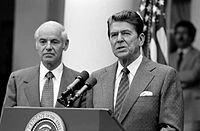
The air controller's union had issues around pay and hours, and more significantly there was a deeply held dissatisfaction at the way they were treated. PATCO was so disgruntled with President Jimmy Carter's administration that they were one of the few unions to endorse Republican Ronald Reagan. They met with the candidate, gave him $10K at a time when his campaign needed it, and Reagan sent the PATCO president a very nice thank you note--
Dear Mr. Poli:
     I have been briefed by members of my staff as to the deplorable state of our nation's air traffic control system. They have told me that too few people working unreasonable hours with obsolete equipment has placed the nation's air travellers in unwarranted danger. In an area so clearly related to public safety the Carter administration has failed to act responsibly.
     You can rest assured that if I am elected President, I will take whatever steps are necessary to provide our air traffic controllers with the most modern equipment available and to adjust staff levels and work days so that they are commensurate with achieving a maximum degree of public safety....
     I pledge to you that my administration will work very closely with you to bring about a spirit of cooperation between the President and the air traffic controllers.
     Sincerely,
     Ronald Reagan
     Oct. 20, 1980


Less than a year later, he fired most of them, explaining the antipathy with which many view the renaming of the downtown DC airport (DCA) from National Airport to Reagan Airport.

"THE STRIKE is a result of frustration that's been building up for years," PATCO striker Robert Devery told Business Week in 1981. "We're not on strike over money. Not 10 or 20 percent of these people would have walked out over money. People are tired of being dumped on, and they want to make it to retirement." 89 percent left before retirement age. About 40 percent of these left to collect disability retirement.

Ronald Reagan was the first president to have been a lifetime member of the AFL-CIO, and he had been active in the Screen Actor's Guild. A young Assistant Attorney General named Rudy Giuliani (yes, him) came forward with a proposal: fire them all if they don't come back in. He explained that for the Administration, about to face negotiations with several much larger federal unions, it was win-win; Reagan won if they came back, and Reagan also won if he fired them and the system was restored relatively quickly. The image of a President who was willing to fight sat well with the foreign policy team. Reagan announced that any controllers who did not come back to work would be fired. (BTW, Rudy's repeated this trick.)

The controllers that had been on strike generally stayed out; 11,345 of the 13,000 strikers were fired. The airline system was hobbled over the short term. Military controllers reported to key airports and contingency plans were activated. A few weeks after the strike, 75% of scheduled flights were operating. Reagan won, PATCO lost, and American labor was never the same.


The PATCO debacle was a tipping point in American labor relations, and contributed to a decline for the American middle class. There are a lot of different aspects that merit attention, but what I'd like to write about is: What happened with the new workforce, the Class of 1982 ?

How Did that Fresh Start End Up?

This was a clean slate, a tabula rasa, an opportunity to hire and develop a brand new workforce. In a way, it was like a start-up: fresh and new. Twenty-eight years later, where are those fresh-faced new hires now?

In 1987 the new hires formed a new union, NATCA. The Clinton administration treated NATCA well and relations flourished. The Bush administration decided to set things straight and take it back; they broke the contract and imposed draconian new terms. The Obama administration is on the verge of mending fences, but the people are quite bitter. They've developed the same perspective as the controllers of 1981: they love their profession, but they hate their employer.

It's a remarkable coincidence. Probability would suggest that it wouldn't end up in the same place. And yet, it's like 1980 all over again. The pay may come back, but the trust will never come back.

How could this happen? They fired the controllers in 1981, but they didn't fire the paramilitary management culture.

The First Generation

The first big wave of controllers were military controllers after World War Two. There was another hiring wave of Korean veterans. They brought a military perspective and leadership style. In the 1960s society changed, but the FAA didn't. Para-military all the way. White shirts and black or brown ties; the IBM look, long after Big Blue had moved on.

FAA Administrators were admirals, generals, and airline executives - none of which are fields known for harmonious relationships. When 1981 happened, the military leadership style was reinforced. The union lost and management won.

The Second Generation: The Class of 1982

The fresh-faced new workforce of 1982 didn't have a shared military background. These were taxi drivers, lumber salesmen, pharmacists, pilots and teachers - very bright people who made it through a tough screening program and a tougher training program. The paramilitary culture that won in 1981 treated the new people like soldiers, too- except most of these people had never been soldiers. After a few years it got old. In 1987 they formed another union. Although things became humane during the Clinton administration, the entrenched management culture is paramilitary.

The Next Generation

Carter and Reagan treated the post-1960's generation as soldiers, and they ended up firing them all. Bush treated the second generation (the Class of 82) as grunts, and that didn't work too well either. The question is: as the Class of 1982 graduates retires, legitimately disgruntled and jaded, will the culture change? Will the NextGen get treated like soldiers, or like artists and craftsmen? That's the NextGen that matters.

Related links:
Don Brown's GetTheFlick is (always) interesting.
So is Blue Eyed Buddhist.