Presience: August 11, 1981 (The Bulletin): “In short, the ruling class considers the destruction of PATCO as inseparable from its overall capitalist policy of defending the profit system with a program of unrestrained militarism internationally and savage austerity for the working class within the United States.”
Amidst today's clamor for an economic policy that further diminishes the American middle class, Milan Kundera suggests that we reflect, remember, and reckon:
The struggle of man against power is the struggle of memory against forgetting.
At one time there was a vibrant American economy, a wealthy middle class, and a standard of living where one wage earner could support a nuclear family.
What was the tipping point? When did we shift from abundance to scarcity and from growth to atrophy? When did Labor stop wrestling Capital for their fare share, and start fighting each other to work for ever-lower wages?
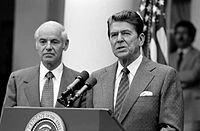
Many think the tipping point was the PATCO strike on August 3, 1981. Our 40th President broke the strike, decertified the young union (1968 to 1981), replaced the strikers, and set a new normal for Industry-Labor relations.
Reflecting on this presidency, Alan Greenspan said: '
Perhaps the most important, and then highly controversial, domestic initiative was the firing of the air traffic controllers in August 1981. The President invoked the law that striking government employees forfeit their jobs, an action that unsettled those who cynically believed no President would ever uphold that law. [The 40th] President ----- prevailed, as you know, but far more importantly his action gave weight to the legal right of private employers, previously not fully exercised, to use their own discretion to both hire and discharge workers.
Tallying the Damage of the 40th Presidency
union busting and disruption of the labor-management balance
organization and arming of the Mujahideen
ending the Cold War by spending both sides into ruinous bankruptcy
. In a truly just culture, the name of the 40th President would be subject to damnatio memoriae, and yet his devotees named an aircraft carrier and an airport after him, ensuring that his memory his name will persist.
Curiously, our current crop of political leaders compete to be recognized as Reagan's reincarnation, invoking his hagiography for their own reasons and advancing his misbegotten philosophy ever further.
Karma: A Bastard Turns 30
Thirty years later, the system that decertified PATCO is now itself illegitimate; unauthorized, unable to pay employees or bills, impotent to collect revenues, on a path toward privatization.
There are anniversaries that stick in the mind. March 15th. July 4th. August 6th. Sept. 11th. Dec. 7th. I'm sure that in the years after the Homestead Strike, people marked the anniversary and reflected on the aftermath. I don't know if anybody still marks the July 6th anniversary of the Homestead Strike; it's slowly faded off the screen.
Tomorrow, Aug. 3rd, is the 28th anniversary of the 1981 PATCO strike.
The air controller's union had issues around pay and hours, and more significantly there was a deeply held dissatisfaction at the way they were treated. PATCO was so disgruntled with President Jimmy Carter's administration that they were one of the few unions to endorse Republican Ronald Reagan. They met with the candidate, gave him $10K at a time when his campaign needed it, and Reagan sent the PATCO president a very nice thank you note--
Dear Mr. Poli: I have been briefed by members of my staff as to the deplorable state of our nation's air traffic control system. They have told me that too few people working unreasonable hours with obsolete equipment has placed the nation's air travellers in unwarranted danger. In an area so clearly related to public safety the Carter administration has failed to act responsibly. You can rest assured that if I am elected President, I will take whatever steps are necessary to provide our air traffic controllers with the most modern equipment available and to adjust staff levels and work days so that they are commensurate with achieving a maximum degree of public safety.... I pledge to you that my administration will work very closely with you to bring about a spirit of cooperation between the President and the air traffic controllers. Sincerely, Ronald Reagan Oct. 20, 1980
Less than a year later, he fired most of them, explaining the antipathy with which many view the renaming of the downtown DC airport (DCA) from National Airport to Reagan Airport.
"THE STRIKE is a result of frustration that's been building up for years," PATCO striker Robert Devery told Business Week in 1981. "We're not on strike over money. Not 10 or 20 percent of these people would have walked out over money. People are tired of being dumped on, and they want to make it to retirement." 89 percent left before retirement age. About 40 percent of these left to collect disability retirement.
Ronald Reagan was the first president to have been a lifetime member of the AFL-CIO, and he had been active in the Screen Actor's Guild. A young Assistant Attorney General named Rudy Giuliani (yes, him) came forward with a proposal: fire them all if they don't come back in. He explained that for the Administration, about to face negotiations with several much larger federal unions, it was win-win; Reagan won if they came back, and Reagan also won if he fired them and the system was restored relatively quickly. The image of a President who was willing to fight sat well with the foreign policy team. Reagan announced that any controllers who did not come back to work would be fired. (BTW, Rudy's repeated this trick.)
The controllers that had been on strike generally stayed out; 11,345 of the 13,000 strikers were fired. The airline system was hobbled over the short term. Military controllers reported to key airports and contingency plans were activated. A few weeks after the strike, 75% of scheduled flights were operating. Reagan won, PATCO lost, and American labor was never the same.
The PATCO debacle was a tipping point in American labor relations, and contributed to a decline for the American middle class. There are a lot of different aspects that merit attention, but what I'd like to write about is: What happened with the new workforce, the Class of 1982 ?
How Did that Fresh Start End Up?
This was a clean slate, a tabula rasa, an opportunity to hire and develop a brand new workforce. In a way, it was like a start-up: fresh and new. Twenty-eight years later, where are those fresh-faced new hires now?
In 1987 the new hires formed a new union, NATCA. The Clinton administration treated NATCA well and relations flourished. The Bush administration decided to set things straight and take it back; they broke the contract and imposed draconian new terms. The Obama administration is on the verge of mending fences, but the people are quite bitter. They've developed the same perspective as the controllers of 1981: they love their profession, but they hate their employer.
It's a remarkable coincidence. Probability would suggest that it wouldn't end up in the same place. And yet, it's like 1980 all over again. The pay may come back, but the trust will never come back.
How could this happen? They fired the controllers in 1981, but they didn't fire the paramilitary management culture.
The First Generation
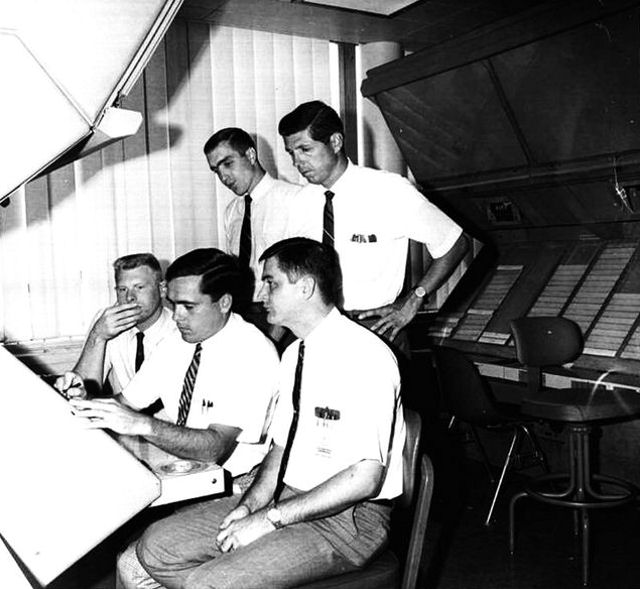
The first big wave of controllers were military controllers after World War Two. There was another hiring wave of Korean veterans. They brought a military perspective and leadership style. In the 1960s society changed, but the FAA didn't. Para-military all the way. White shirts and black or brown ties; the IBM look, long after Big Blue had moved on. FAA Administrators were admirals, generals, and airline executives - none of which are fields known for harmonious relationships. When 1981 happened, the military leadership style was reinforced. The union lost and management won.
The Second Generation: The Class of 1982
The fresh-faced new workforce of 1982 didn't have a shared military background. These were taxi drivers, lumber salesmen, pharmacists, pilots and teachers - very bright people who made it through a tough screening program and a tougher training program. The paramilitary culture that won in 1981 treated the new people like soldiers, too- except most of these people had never been soldiers. After a few years it got old. In 1987 they formed another union. Although things became humane during the Clinton administration, the entrenched management culture is paramilitary.
The Next Generation
Carter and Reagan treated the post-1960's generation as soldiers, and they ended up firing them all. Bush treated the second generation (the Class of 82) as grunts, and that didn't work too well either. The question is: as the Class of 1982 graduates retires, legitimately disgruntled and jaded, will the culture change? Will the NextGen get treated like soldiers, or like artists and craftsmen? That's the NextGen that matters.

 Many think the tipping point was the PATCO strike on August 3, 1981. Our 40th President broke the strike, decertified the young union (1968 to 1981), replaced the strikers, and set a new normal for Industry-Labor relations.


 Ronald Reagan was the first president to have been a lifetime member of the AFL-CIO, and he had been active in the Screen Actor's Guild. A young Assistant Attorney General named
  The controllers that had been on strike generally stayed out; 11,345 of the 13,000 strikers were fired. The airline system was hobbled over the short term. Military controllers reported to key airports and contingency plans were activated. A few weeks after the strike, 75% of scheduled flights were operating. Reagan won, PATCO lost, and American labor was never the same.

 Posts
Posts

