Showing posts with label war. Show all posts
June 16, 2011

The King's Illegal Wars Three and Four


Somewhere on my list of things I'll probably never do is quoting Andrew Sullivan - but things never stay the same - which is one of his points, first made here and more so here, and quoted below:

I do believe that in the matter of a potential battlefield like Yemen, strikes against known terrorists trying to kill Americans are warranted, if we are sure we can kill or capture the enemy with accuracy and minimal civilian casualties. Sending in a SEAL team to capture or kill bin Laden is not at the level of a full-scale war with Pakistan - although we should note that does not seem that way to Pakistanis, hence the huge wave of anti-Americanism that has resulted.

There must come a point, however, when you are not targeting a one-off specific figure or cell, but launching round after round of drone missiles into a country, as into the Af-Pak border. The drone attacks into Pakistan are mighty close to warfare, it seems to me. There comes a point, in other words, at which a military kinetic action becomes a war.

Drones are particularly dangerous instruments in this respect. They allow a president to pick war at will, and placate the public with no military casualties. This is precisely what the Founders were scared of. We have created a King with an automated army, and no Congressional or public check outside of elections, when the damage may have already been done.

Maybe the line between targeted anti-terror strikes and de facto, ongoing warfare is hard to define. Sometimes, the executive may need to act urgently and unilaterally to counter an imminent military threat. But we are so far away from that now it's almost irrelevant. I guess ongoing, routine military attacks constitute war in my book. (One good test is: if it were happening to us, would we consider it an act of war? If a foreign power dropped a drone missile on your block, would you call it a military kinetic action?)

But my point is that it is this inherent lack of clarity is what guided the Founders to do what they did. They set the standard for warfare very high. They wanted to restrain the Prince. And that restraint on presidential power is at the core of the American experiment of divided powers. Which is why, the Bush-Cheney position was not only, in my view, imprudent, but deeply hostile to the core founding values of this country.

The thing about war, as the Founders understood, is that you rarely end up with anything like the state of affairs you started with.

You can begin with a few "military advisers" in South Vietnam and end up in years of brutal, counter-productive warfare. You can start with Wolfowitz's fantasy of a quick and cheap Iraq intervention and end up a decade later a trillion dollars short and with a real anxiety that the whole place will go to hell when and if the US really does pull out. You can help some Afghan rebels defeat the Soviets and set in train a war that is now at its most intensive decades later.

But at least we did have a debate and vote with respect to Iraq and Afghanistan. There was no Congressional debate over Libya or now the escalation in Yemen. The administration's argument on Libya, as revealed yesterday, is that the conflict is too constrained and limited to be called a war. Please. Tell that to those hearing shells and missiles explode in military installations around their neighborhoods in Tripoli. Thousands of air raids and sorties have occurred since this not-war was not-declared.

Second: mission creep is not some lefty fantasy. It's a historic reality. The deployment of violence wreaks its own consequences that are often uncontrollable except through more force. And the notion that we are not trying to install regime change in Libya through military action is ludicrous. What was justifed as a one-off attempt to prevent an alleged massacre of "tens of thousands" is now an on-going, soon to be billion-dollar war that's going nowhere slowly, but clearly trying to kill and traumatize a dictator and destroy the physical components of his regime. On what grounds does an American president in a fiscal hole like ours borrow another billion dollars to finance an intervention in a civil war in ... Libya?

And I do think the military/CIA distinction matters. One thing I've learned this past decade is that the CIA is pretty much its own judge, jury and executioner. It is much less accountable to the public, more likely to break the laws of war and destroy the evidence, more likely to do things that could escalate rather than ameliorate a conflict. To read that the CIA has been given a green light to do what it wants to do in Yemen with drones seems to me easily over the trip-wire for war that requires Congressional buy-in.

Technology has made this more problematic. If the CIA, based on its own intelligence, can launch a war or wars with weapons that can incur no US fatalities, the propensity to be permanently at war, permanently making America enemies, permanently requiring more wars to put out the flames previous wars started, then the Founders' vision is essentially over. I think it's a duty to make sure their vision survives this twenty-first century test.
April 07, 2011

Is America Addicted to War?

If you cared about a 235-year-old loved one who kept repeating disfunctional behaviors in situations that didn't justify the behavior, you'd probably ask them about it. Why do you keep doing that? Don't you see that you're in a pattern that's bad for you? Can't you stop yourself? What, What, What are you doing?


In Foreign Policy, Steven Walt asks Is America Addicted to War? It's a legitimate question, and Walt suggests that we are, in fact, addicted to war: we're not making good decisions, we keep doing things we know are going to end poorly, we're not learning from our mistakes.

Walt offers five reasons why Why America Keeps Fighting Foolish Wars-

  • Because We can link
    The most obvious reason that the United States keeps doing these things is the fact that it has a remarkably powerful military, especially when facing a minor power like Libya. When you've got a hammer, everything looks like a nail. When you've got hundreds of planes, smart bombs, and cruise missiles, the whole world looks like a target set. It's hard to resist the temptation to "do something!"

  • We Have No Serious Enemies link
    The end of the Cold War left the United States in a remarkably safe position. There are no great powers in the Western hemisphere; we have no "peer competitors" anywhere (though China may become one sooner if we keep squandering our power foolishly); and there is no country anywhere that could entertain the idea of attacking America without inviting its own destruction. We do face a vexing terrorism problem, but that danger is probably exaggerated, is partly a reaction to our tendency to meddle in other countries, and is best managed in other ways. It's really quite ironic: Because the American homeland is safe from serious external dangers (which is a good thing), Americans have the luxury of going abroad "in search of monsters to destroy" (not a good thing).

  • It's the Establishment, Stupid link
    The foreign-policy establishment is hard-wired in favor of "doing something." Foreign-policy thinking in Washington is dominated either by neoconservatives (who openly proclaim the need to export "liberty" and never met a war they didn't like) or by "liberal interventionists" who are just as enthusiastic about using military power to solve problems, provided they can engineer some sort of multilateral cover.

  • Congress has Left the Building link
    The authority to declare war is given to Congress, not the president, but that authority has been steadily usurped ever since World War II, and Congress has not seen fit to assert their role. Modern presidents of both parties clearly feel no constraints about ordering U.S. forces to attack other countries, or even to fully inform Congress as to what we might be doing in secret. The vaunted system of "checks and balances" supposedly enshrined in our Constitution simply doesn't operate anymore, which means that the use of America's military power has been left solely to the presidents and a handful of ambitious advisors.

  • The All Volunteer Force link
    A third enabling factor behind our addiction to adventurism is the all-volunteer force. By limiting military service only to those individuals who volunteer to do it, public opposition to wars of choice is more easily contained. Could Bush or Obama have kept the Iraq and Afghanistan wars going if most young Americans had to register for a draft, and if the sons and daughters of Wall Street bankers were being sent in harm's way because they got an unlucky number in the draft? (more)


And I would add these factors:
  • The military-industrial complex profits from war and funds politicians
  • Demagogues, think tanks, and lobbyists profit from war
  • War is a useful distraction


America needs a 12-step program.


March 27, 2011

The Habituation of Routinized War and the Return of the Draft


There are wars that Americans felt good about in that they were considered just and right. These appropriate wars where the wars that somebody else started, where they attacked us and we declared war against them. WW1, WW2: you can quibble about who knew what/when, and the extent to which we built the provocative scenario, but they were understood as responses to an attack. Americans willingly sacrificed their children and their treasure for those kinds of war.

During the second half of the 20th century, and particularly in the context of the Cold War, a tenet of American military policy was the "second strike" - the United States wouldn't make the initial attack (the first strike), but we would be completely ready for the second strike. Nobody talks about second-strike capability any more. Second Strike is so 1992.

The First-Strike Paradigm

These days we don't attack countries that attacked us first (because countries don't attack us; only small groups of fanatics attack us). We attack other countries because we want to; these are optional wars that we choose to make.

Proficiency at Starting Wars

Proficiency means that things get easier, and your performance improves, the more you do something. We've gotten very proficient at starting wars. Starting wars must be much easier than ending wars, because we've started several lately and we haven't ended any. The Dept. of Defense is in at least three wars right now; the CIA has got one going in Pakistan, too.

We don't declare war any more, or at least we don't do it by the book. We're bipartisan in this willful disregard of the Constitution. Being attacked is no longer a prerequisite for starting a war, and neither is Congressional declaration; we've become clever, we're into War 2.0, and we've developed new excuses justifications for starting a war. Don't fetishize the old ways.

Prophylactic War The opportunistic use of 9/11 as justification for extension of American hegemony moved America from second-strike to first-strike, justified by the dubious philosophies of preventive war or preemptive war
*
: we don't need to wait for mushroom clouds over American soil; bring it. The hubris of George w. Bush / Dick Cheney / Donald Rumsfeld / Paul Wolfowitz was that we could do this surgically, quickly, and with a downsized force.

Humanitarian War As President Obama remarked in his 2009 Nobel Peace Prize speech: “I believe that force can be justified on humanitarian grounds, as it was in the Balkans, or in other places that have been scarred by war. Inaction tears at our conscience and can lead to more costly intervention later. That’s why all responsible nations must embrace the role that militaries with a clear mandate can play to keep the peace.”

The Daily Globe and Mail explains today's philosophy of humanitarian war:
This doctrine is known as the “responsibility to protect” (R2P or RtoP) and was endorsed by the United Nations in 2005. It mandates that the “international community” is morally obliged to defend people who are in danger of massive human-rights violations. R2P is the moral underpinning of the war in Libya, and it’s the reason why people have been so amazingly eager for us to rush into battle.
The hubris of Barrack Obama / Hillary Clinton / Samantha Power / Susan Rice was that we could do this surgically, quickly, and without boots on the ground. At the United Nations, RtoP is considered an achievement of Kofi Annan which is embraced by Ban Ki Moon.

The 1.5 Political Parties

In a blog post today, EBM points out that there's not a significant difference between America's "1.5 political parties", and she's quite right. Consider the similarities between the wars of our last two Presidencies:

U.S. Senator Chuck Hagel (R-Neb) writes,
"So why did we invade Iraq? I believe it was the triumph of the so-called
neo-con
ideology, as well as Bush administration arrogance and incompetence that took America into this war of choice. . . . They obviously made a convincing case to a president with very limited national security and foreign policy experience. . . "

Take Hagel's statement, change the names, and see if it's still valid:
"So why did we invade Libya? I believe it was the triumph of the so-called
neo-lib
ideology, as well as Obama administration arrogance and incompetence that took America into this war of choice. . . . They obviously made a convincing case to a president with very limited national security and foreign policy experience. . . "

Routinized War

Mickey Kaus writes,
In a true empire – in this case, the empire of UN approved human rights enforcement – war never really ends. Always someone to protect somewhere. Imagine living in imperial Britain in the mid-19th century. There would almost always be a war or police action – actual shooting and killing – going on.

For a true empire to work – even, or perhaps especially, a humanitarian empire – war has to be routinized. You’ve got two wars going already? No need to change the president’s schedule to start a third war. Tour Latin America. Talk about your NCAA brackets. Don’t give a big speech – I mean, you don’t call a press conference every time the police run a sobriety checkpoint, do you?

Habituation

We have become habituated to a state of continual warfare, our corporations have adjusted to the money stream, and our institutions have realigned their objectives and budgets to ensure their continuation for the foreseeable future. Habituation turns a goat-roping exercise into the new normal.

The military-industrial complex is motivated to encourage this habituation. What makes habituation more effective?
Two factors that can influence habituation include the interstimulus interval (ISI), or the amount of time between each successive presentation of the stimulus, and the stimulus duration, or the length of time the stimulus is presented. Shorter ISIs and longer durations increase habituation; longer ISIs and shorter durations decrease habituation.
We can expect more undeclared wars, occurring with shorter intervals and of increasing duration. Just saying.


How old is an American kid who remembers peace?

A sixteen-year-old probably remembers when the United States was at peace. In a few more years, that cohort will be nineteen years old. Then the draft-age kids will be 18, their country will have been at war since they were born, and it'll be just like the Oceania vs Eurasia vs Eastasia War.

I thought Charles Rangel was grandstanding when he called for compulsory conscription, but I see now that the Korean War infantryman
*
was exactly right. You ask a kid about the draft these days, and they're going to reply, "NBA or NFL?"

Mickey Kaus says the same thing in his post:
It helps achieve routinization if wars can be conducted by a distinct cast of professionals whom we hire to do the job, as opposed to ordinary citizens who are drafted. That way when soldiers start dying … well, that’s the business they have chosen, right?

And they’re largely drawn from a distinct geographic region, the South. Mothers don’t have to worry that their sons will sent to fight against their will, as happened in Vietnam – and if they’re Northern mothers in well-off suburbs they may not even know anyone who has a family member at risk.


Reintroduction of the Draft

What are the dynamics that might reverse this trend?
  • Significant loss of American military personnel
  • reintroduction of cumpulsory conscription
  • Overextension and economic collapse (oops)
  • an unforeseeable event that provides entry for a new political movement
  • development of a domestic antiwar movement


If not a full reintroduction of the draft, we could at least restore the Draft Lottery. Let enough mothers know that their sons have low draft numbers, and all of a sudden war won't be routine anymore.
And yes, my children are eligible or about to become eligibile for the draft.
October 28, 2009

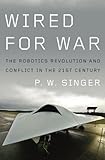
Finished Wired For War

Today I finished reading Wired For War : The Robotics Revolution and Conflict in the 21st Century, by P.W. Singer. This was an excellent book that took me an uncharacteristically long time to read, because every few pages I felt filled up with the implications of what Singer is talking about and I'd need to set it down and let it percolate. 
Progress is accelerated during wartime, and the country has been at war for 8+ years in two countries, and so logically we should be seeing remarkable technological advances. We are, and mostly on two fronts: improved survival rates of combat injuries, and increased use of automation in the forms of aircraft (mostly in unmanned aerial vehicles {UAVs}) and surface robots.

There's going to be long-lasting social changes because of these wars, and I believe they're in stealth mode because to a large extent the war is not evident to civilians. Demographically, we're building a new generation of wartime veterans (which is a great result from a lousy process), and we're also generating a new generation of wounded vets.

There are remarkable advances being made in aviation, automation, navigation, robotics, telemetry, real-time systems, and weapon systems. Google's new Android operating system, for instance, is being used in the Raytheon Android Tactical System (RATS). Soldiers will be able to see each other's location in the "battlespace".

Just as rifles permitted a soldier to kill an enemy at a new range, today's gear allows a "pilot" in Nevada to kill an enemy in Afganistan. Singer does a great job of teasing out the moral implications of this technowar. For instance, is a contractor operating a Predator drone an illegal combatant? Does that justify an enemy's attack on a Nevada shopping center? When killing becomes a real-world video game, are we producing the same child warriors that we decry in Africa?

I highly recommend this book.