Showing posts with label boeing. Show all posts
April 09, 2011

Mr. Honey, the Reindeer, and the Ethics of Fatigue


What advice might you give to help a person know how to proceed? Here's an attempt:
Therefore, go forth, companion: when you find
No highway more, no track, all being blind,
The way to go shall glimmer in the mind.


"The Wanderer" by John Masefield


This post tells its story in media res — the first scene is in the vivid recent moment, then the storytelling goes back in time to the beginning, and time proceeds through the opening moment and continues to the denouement. But if you'd rather watch a movie, I recommend that you watch No Highway In the Sky.

Recent and Vivid: Southwest Flight 812


From the Associated Press:
On April 1 2011, a Southwest Boeing 737 with 118 people on board rapidly lost cabin pressure after the plane's fuselage ruptured, causing a 5-foot tear. Passengers reached for oxygen masks as the pilots quickly descended before making an emergency landing at an Arizona military base.

While the incident is still being investigated, the jet had been pressurized and depressurized 39,000 times in its 15 years and metal fatigue is suspected. Cracks were subsequently found on five other Southwest jets with more than 30,000 cycles.

That came as a shock to the industry. Boeing engineers had forecast that the planes wouldn't need to be inspected for metal fatigue until at least 60,000 cycles.


From the Seattle Times, which follows Boeing closely:
...the in-flight rupture of a Southwest Airlines Boeing 737 on Friday has raised concerns about part of the fuselage they previously thought wasn't vulnerable.

"It's a much thicker skin there," said John Hart-Smith, a world-renowned expert on metal-aircraft structures and a retired high-level Boeing engineer. "Typically, that area has never been susceptible to cracking at the lap splices." The limited scope "is a blessing," Hart-Smith said. "But it's a warning."

Hans Weber said that maintenance procedures to check for fatigue were established after the Aloha Airlines event. "The whole community worked really hard after Aloha to get full control over this aging-aircraft problem," Weber said. "And until about last year, we basically had no more problems. This is not good. This is really a surprise."


I think Southwest's response has been admirable and consistent with their culture:
After last week's rupture, Southwest grounded 80 737s for immediate inspection, forcing the cancellation of hundreds of flights. Its inspectors found five more planes with signs of lap joint cracks; those remain grounded while the others returned to work.


From the Wall Street Journal:
Southwest Airlines' move to ground dozens of planes last Saturday, just hours after learning of possible structural problems, was an unusual move in the industry. Typically, airlines wait for regulatory direction and manufacturer recommendations before removing planes from service.

Faced with the question of whether to let dozens of 737 jets fly with potential structural problems unlike any faced by the industry in decades, Southwest grounded the planes, canceling more than 620 flights and delaying 2,700 others.

"I give Southwest's leadership credit for not waiting until someone was pounding on them," said Robert Francis, a former member of the NTSB.


You can see Southwest's dilemma. If we ground the 737 fleet then Southwest disappears, and yet they've been very consistent in prioritizing safety over economics.

The question is what we'll learn and then where "somebody" sets the balance point. Would somebody risk 130 passengers to keep Southwest flying, to maintain a major transportation system, and to avoid the economic effects of a travel ban on 737s? Is the loss of 150 people an acceptable cost to maintain a transportation network?

We seem to have no problem with the loss of 32,738 Americans a year in our automobile transportation system. There's no telling where people set the tipping point. The good news is: you're safer in a 737 than in your Volvo.


1948 - No Highway In the Sky

Southwest Flight 812 was the intro, the hook, the vivid recent story that we're all aware of. But there's really very little new under the sun (VLNUS); we've seen this several times before. Let's go way back, back to 1948 and a new book by Neville Shute.

Nevil Shute is a favorite author of mine. The first book of his that I read was On The Beach; it is tremendous. His full name is Neville Shute Norway; he writes under a pen-name to keep his engineering work separate from his writing. In a way, he was the Micheal Crichton of his decade.

One of Shute's early books was "No Highway", which was later made into a movie, "No Highway in the Sky".

It tells the (fictional) story of Mr. Theodore Honey, an aeronautical engineer who becomes convinced that the Reindeer, a new airliner his company makes, is likely to suffer from metal fatigue and have a catastrophic failure after a certain number of flights.

The establishment refuses to believe Mr. Honey, shuns him, and eventually attempts to have him declared mentally unfit. Events unfold and, in fact, the Reindeer's empennage falls off while taxiing.

Mr. Honey's reputation is restored, although that seems to mean little to him; he was just doing what he thought was right the whole time. Meanwhile, his demonstration of virtue under pressure makes him attractive to women.


Although the movie is set in 1952's new, glamorous world of aviation the story is ancient: how does a person proceed? How do they behave within their beliefs? How do we handle uncertainty? These are issues that predate Kitty Hawk, and these are questions that make flying seem rather simple.

Life Imitates Art: The de Havilland Comet Disasters of 1954

When pressurized aircraft were developed, and again when jet engines were introduced, the physics of aircraft moved into unprecedented altitudes and speeds. The implications of repeated cycles of pressurizing and depressurizing the cabin were not completely understood.

The deHavilland Comet was the world's first commercial jet airliner. It first flew in 1949 and was a landmark in aeronautical design. A few years after introduction into commercial service, in 1954 the Comet suffered from catastrophic metal fatigue, which in combination with the pressurisation, caused two well-publicized accidents where the aircraft tore apart in mid-flight.

The Comet was withdrawn from service. There were two courts of inquiry, and eventually the effects of compression cycles and the square window designs were understood. The early Comets were not returned to service. A new version, the Comet4, entered passenger service is 1958. (The cockpit photo at the top of this post is a deHavilland Comet4.)

In the meantime, the DC8 and B707 were introduced (both benefiting from the Comet's experience) and the Comet series never regained her initial status as a leading airliner. Some Comet airframes were flown until March 2011 in military service as the Nimrod ASW aircraft.

It appears that de Havilland and the airlines behaved responsibly; the risk was not understood, the aircraft were withdrawn from service after the second 1954 crash, and there was a public inquiry.

Life Repeatedly Imitates Art

A favorite shibboleth is, "The struggle of man against power is the struggle of memory against forgetting", and the questions described by Shute, seen in the Comet inquiries, and repeated in subsequent events demonstrate the need of memory and the value of remembering.

Boeing 737 Rudders

In the 1990's a problem developed with the 737 rudders. There was a crash in 1991 and then a crash in 1992, and there was an event in early 1994 but there was no Theodore Honey involved and the situation never moved from denial to acceptance until something really bad happened.

Back to the Reindeer: Skin Cancer in the 737


In April 1988, a Boeing 737 flying as Aloha Flight 243 suffered extensive damage after an explosive decompression in flight. The crew was able to land safely on Maui. The only fatality was flight attendant C.B. Lansing who was blown out of the airplane.

The age of the aircraft became a key issue (it was 19 years old at the time of the accident and had sustained a remarkable number of takeoff–landing cycles — 89,090, the second most cycles for a plane in the world at the time — well beyond the 75,000 trips it was designed to sustain).

According to the NTSB report, passenger Gayle Yamamoto noticed a crack in the fuselage upon boarding the aircraft prior to the ill-fated flight but did not notify anyone.

The National Transportation Safety Board (NTSB) blamed a combination of corrosion and widespread fatigue damage, the result of repeated pressurization cycles during the plane's 89,000-plus flights.

More Skin Cancer in the Boeing 737

  • July 2009: Southwest Flight 2294, a Boeing 737, experienced a football-sized hole in the fuselage and made an emergency landing.
  • October 2010: American Flight 1640, a Boeing 757, had a 1-foot by 2-foot hole develop.
  • Which brings us back to this post's opening scene:
    April 2010: Southwest Flight 812 had a five-foot hole open up.

This has nothing to do with airplanes

It does seem like there's a problem with the 737 sheet metal, but let me say (again) that you're safer in a 737 than you are in your Volvo.

Nevil Shute's book has nothing to do with airplanes, just like science fiction really doesn't have to do with technology; the frameworks provide a way to examine human behavior in contrived settings. It's about the philosophy of how to proceed within your beliefs.

Fatigue, Perseverance, and Virtue

Nevil Shute's story has a lot to do with modern times. With the country in three wars, the economy tanking, the failure of the political system, the attack on unions, the tax reductions for the rich, the service reductions for the weakest -- fatigue can set in and have pernicious cumulative effects just like the Reindeer experienced.

At what point do we say, "That's enough. Stop." One event? Two events?
Do we stay "stop" after Wisconsin, or Michigan, or Ohio?
In a time of multiple crises, how does one proceed in a crazy world?

Hopefully, by persevering and demonstrating virtue as in Theodore Honey's example.
January 17, 2011

Military Industrial Complex : 50th Birthday


Today is a day of remembrances, among them President Eisenhower's farewell speech given in the last days of his administration, 50 years ago today, Jan. 17, 1961. The full text of the speech is online. Here's a section of the speech I'd like to consider:

But threats, new in kind or degree, constantly arise. Of these, I mention two only.

Until the latest of our world conflicts, the United States had no armaments industry. American makers of plowshares could, with time and as required, make swords as well. But now we can no longer risk emergency improvisation of national defense. We have been compelled to create a permanent armaments industry of vast proportions. Added to this, three and a half million men and women are directly engaged in the defense establishment. We annually spend on military security alone more than the net income of all United States corporations.

Now this conjunction of an immense military establishment and a large arms industry is new in the American experience. The total influence -- economic, political, even spiritual --is felt in every city, every Statehouse, every office of the Federal government. We recognize the imperative need for this development. Yet we must not fail to comprehend its grave implications. Our toil, resources, and livelihood are all involved. So is the very structure of our society.

In the councils of government, we must guard against the acquisition of unwarranted influence, whether sought or unsought, by the military-industrial complex. The potential for the disastrous rise of misplaced power exists and will persist. We must never let the weight of this combination endanger our liberties or democratic processes. We should take nothing for granted. Only an alert and knowledgeable citizenry can compel the proper meshing of the huge industrial and military machinery of defense with our peaceful methods and goals, so that security and liberty may prosper together.

Akin to, and largely responsible for the sweeping changes in our industrial-military posture, has been the technological revolution during recent decades. In this revolution, research has become central, it also becomes more formalized, complex, and costly. A steadily increasing share is conducted for, by, or at the direction of, the Federal government.

Today, the solitary inventor, tinkering in his shop, has been overshadowed by task forces of scientists in laboratories and testing fields. In the same fashion, the free university, historically the fountainhead of free ideas and scientific discovery, has experienced a revolution in the conduct of research. Partly because of the huge costs involved, a government contract becomes virtually a substitute for intellectual curiosity. For every old blackboard there are now hundreds of new electronic computers. The prospect of domination of the nation's scholars by Federal employment, project allocations, and the power of money is ever present -- and is gravely to be regarded.

Yet, in holding scientific research and discovery in respect, as we should, we must also be alert to the equal and opposite danger that public policy could itself become the captive of a scientific-technological elite.


Eisenhower chose to identify two threats: the military-industrial complex, and the power of federal contracts in driving research and the economy. These two threats have become one - federal contracts and a national economy driven by the military-industrial complex.


While the phrase "military-industrial complex" has endured, it's not the only formulation of a name for this particular creature.

The phrase began as "war-based" industrial-congressional complex before the word military was inserted in later drafts.* Later the president chose to remove the word congressional in order to placate members of the legislative branch.

Linguist Noam Chomsky has suggested that "military-industrial complex" is a misnomer because (as he considers it) the phenomenon in question "is not specifically military."* He claims, "There is no military-industrial complex: it's just the industrial system operating under one or another pretext (defense was a pretext for a long time)."

Norman Solomon has described the Military-Industrial-Media Complex. He has accused the military-industrial-media complex of using their media resources to promote militarism, and offers this example regarding NBC News:
"General Electric (which owns NBC) is a subcontractor for the Tomahawk cruise missile and Patriot II missile both of which were used extensively during the Persian Gulf War. General Electric also manufactures components for the B-2 stealth bomber and B-52 bomber and the E-3 AWACS aircraft which were also used extensively during the conflict. During Gulf War I, General Electric received $2 billion dollars in defense contractors related to weapons which would be used in Gulf War I and Gulf War II."

Chomsky moves further to say that the role of the media in the modern economy is to "manufacture consent" in favor of industry within the democracy. Chomsky identifies five factors that entice media to manufacture consent for industry; his fifth factor was The Cold War, and Chomsky says that role is now performed by the Global War On Terror.


We have seen multiple situations where government contracts subsidize industry R&D; overruns are paid for and blamed on the government, not the contractor; and contractors influence the legislators that set government priorities. It becomes a self-licking ice-cream cone. You would never hire a contractor for your house with this arrangement.


Two recent news stories describe the current state of the military-industrial complex: the first is the Washington Post series, "Top Secret America", exposing the way that industry in the guise of contractors and manufacturers has turned 9/11 into a profit center.

Another recent military-industrial complex news story is the decision by the Dept. of Homeland Security (which is, itself, a MIC construct) to shut down development of a high-tech virtual wall along the American-Mexican border, covered here by the NY Times, and here by the Wall Street Journal. The government has spent more than $1 Billion dollars to end up without what they paid for. The primary contractor, Boeing, is an excellent example of the military-industrial complex: they over-promised, under-delivered, they still get paid and make money, they aren't held accountable, and they're bidding for new work next month.


When I think of corruption I think of sweetheart deals on road projects and criminals with influence who walk away from charges, but that's penny-ante stuff compared to the military industrial complex.

What amazes me is that Eisenhower saw it coming, warned us about it, and it happened anyway.

Of course, there's very little new under the sun (VLNUS). Eisenhower said his piece in 1961; USMC Major General Smedley Butler (winner of two Medals of Honor) described the same thing in the 1930s with his speech and book, War Is A Racket.

Happy 50th Birthday, Military Industrial Complex.

related: Sure, They Can Cancel a Big Defense Project re the A12
June 06, 2010

(Solar) Weather Delays: A Curious Juxtaposition

I had two headlines in my inbox that suggest a curious juxtaposition.

First was a story about Boeing ATC being awarded a major research & development support contract worth up to $1.7 billion for the Next-Generation Air Transportation System. They're going to shift from air traffic control to air traffic management.

A large portion of this effort is moving from a ground-based system to a space-based system, moving facilities from the (existing) ground grid to satellites, and moving decision making from the (existing) command-and-control structure to a systemic, profitability-sensitive collaborative model.

Which is good news for primary beneficiaries Boeing, Lockheed Martin, Airbus and Cessna, and secondary beneficiaries Adacel, Ensco, Embry-Riddle Aeronautical University, Harris, Honeywell, Jeppesen, Jerry Thompson & Associates, Mosaic ATM, Spectrum Software Technology, Tetra Tech ATM, and the Washington Consulting Group. The entire military-industrial complex is eating at this trough.

Second is a story from NASA about expected increases in solar activity over the next decade, which have the ability to compromise GPS, satellites, space-based systems, and datalink communications.

The new National Space Weather Program notes how "people of the 21st-century rely on high-tech systems for the basics of daily life. Smart power grids, GPS navigation, air travel, financial services and emergency radio communications can all be knocked out by intense solar activity. A century-class solar storm, the Academy warned, could cause twenty times more economic damage than Hurricane Katrina."

I'm just wondering: are they reading each other's press releases?

March 14, 2010

Alpha, Beta, Gamma Testing at Apple, Toyota, and Boeing

iPadSaturday the floodgates opened and 120,000 people pre-ordered their Apple iPads, which is possibly the worst-named product in recent memory. (One woman journalist immediately exclaimed, "OK, so no women were on the naming panel, I see."
Exactly what they're pre-ordering isn't very well known. The specs that are available were updated just last week. Industry watchers are pretty sure that iPad 1.2 will probably have a USB port, and that iPad 2.0 will be able to multitask (that is, run apps simultaneously). PC Magazine's headline read, "iPad PreOrders for Idiots Only".

This leads to a discussion of the software release cycle, which has been adapted into a product release cycle. The software release cycle evolved from the 1960's IBM product test cycle.

Alpha Beta Gamma Omega testingAlpha Testing is testing done within the company, by people other than the engineers, programmers, and designers who built the product. It usually involves white box techniques, but can include black box and even grey box techniques.

Beta Testing (following Alpha Testing) is user testing within a controlled situation. The product is not released to the market. A "beta version" is the first version released outside the organization or community that develops the product, for the purpose of evaluation or real-world black/grey-box testing.

As the Internet has allowed for rapid and inexpensive distribution of software, and as competitive pressure has decreased time-to-market, companies have begun to take a looser approach to use of the word "beta". Netscape Communications was infamous for releasing alpha versions to the public and calling them "beta" releases. Gmail and Google News have been in beta for years. This technique may also allow a developer to delay offering full support and/or responsibility for remaining issues.

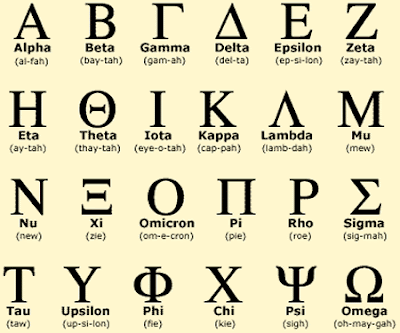
With the ubiquity of the web, a lot of people know about alpha and beta products. There's more than just those two. Gamma testing is the third level of testing, generally for safety. Delta testing is the fourth round of testing, and Omega is the last round of testing. (This is the sequence of letters in the Greek alphabet). Unfortunately, Gamma testing is becoming a thing of the past, killed off by decreased time cycles, competitive pressure, and the myopic focus on quarterly profits.

Apple iPad alpha beta versionSaturday Apple started taking advance orders for the iPad (wifi not 3G), and 120,000 were ordered, sight-unseen, in the first 24 hours. People are willing to pay a premium to be an early-adopter and what is essentially a beta-tester. This in spite of the fact that the people who bought the first iPhone would shortly see an improved, updated version being sold for less.

For $600 you get a WiFi tablet with no camera, no Java, no Flash, no stylus, limited multitasking, and an Apple logo. For $600 you can also get a fully functional netbook. To a degree, such is the cachet of Apple and the major alpha-geek status derived from being the first person at the coffee bar with an iPad.

What's interesting is that Apple is selling a beta-test product to early adopters who are eager to participate in the process. Apple's not the only outfit selling a beta-test product to the public.

In the NY Times, Robert Wright blogs about Toyota and the increased tendency to conduct the "subsequent, de facto beta testing that is also known as 'selling the product and then reading the user forums'." I think the original Big Blue product managers would shudder at using Granny as a Gamma Tester.

In my time, the most egregious public-as-gamma-tester episode was the Boeing 737 rudder charade. There was a clear problem with the product that was not discovered during alpha and beta testing. 204 people died in these accidents between '91 and '94: United 585 (25 lost), Copa 737 (47 lost), USAir 427 (132 lost).

When the end users discovered the problem, the response was to keep the fleet flying (too big to ground) while the rudder hydraulics were reworked and updated. During the time between the discovery and the resolution, every passenger on a 737 was participating in an undeclared test flight. The government's bet in not grounding the fleet worked (in that we didn't have another disaster before the rudders were reworked) but IMO it was a terrible, cynical decision.

If the people pre-ordering iPads are happy to pay to be beta-testers, that's all good. But if they think they're buying a ready-for-market product, they're suckers.