

Nozzling These Down, Here
18 hours ago
 From Bike Pittsburgh:
 Located twenty miles northwest of downtown Pittsburgh, the bucolic borough of Beaver PA has been known to flirt with pretensions of grandeur. Realtors™ are known to say, "Beaver is the other Sewickley". Particularly self-assured residents may even turn it around and say, "Sewickley is the Beaver of Allegheny County".
In 1920 when the Hudson’s Bay Company began publishing a magazine for its 250th anniversary, The Beaver probably seemed to be a good title. The company owed much of its early fortune to the trade in beaver pelts.
The Beaver, which was initially a bit of in-house boosterism, evolved into a respected magazine about Canadian history. Last week Canada’s National History Society, the nonprofit group that now publishes The Beaver, decided that the Internet required the magazine to undergo a name change.
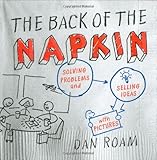
 Finished reading "The Back of the Napkin" by Dan Roam. This book dealt with thinking visually and telling/selling through images, specifically sketches and charts drawn on Napkins.
 Roam presents a series of thought experiments that takes the reader through his perspective on drawing. He asks, How come in Kindergarten everybody can draw, and by 12th Grade nobody thinks they can draw? His Visual Codex provides generic examples of the type of pictures you might use in different situations, determined by the interrogatives (when where who what how why) and by a selection of five dimensions that he identifies.
 Roam recommends Vanity Fair Everyday napkins for drawing, but says that most any will do.
 In this image to the right, I've overlaid the existing state boundaries above our regional map in Neil Freeman's depiction.
 Facebook has become an information bubble. It knows so much about so many people, but the real treasure is that it knows who your network is. This accumulation of glommed data is a marketer's fantasy come true. And yet, Facebook has not found a way to make money.
 IANAF (I am not a Facebook-er), but I've had friends show me what they do on Facebook. I haven't tried it because I'm concerned it's a lot like doing heroin, one flirtation and you're hooked. That seems to be the case among people I know.

 In his new book, Jarod Lanier writes regarding Facebook, "The real customer is the advertiser of the future, but this creature has yet to appear at the time this is being written. The whole artifice, the whole idea of fake friendship, is just bait laid by the lords of the clouds to lure hypothetical advertisers—we might call them messianic advertisers—who might someday show up".
 Once upon a time, there was an alternative fuels (biodiesel) vehicle named Earthrace. She was a 78-foot wave-piercing trimaran made out of carbon fiber. She was created to break the world record for circumnavigating the globe in a powerboat while making an environmental statement. The way-cool vertical fins at the stern are engine air intakes.

 The Japanese whaling fleet was not unprepared. Their company included the Shonan Maru 2, which is described as a "security and utility" vessel. For two days, the Ady Gil had prevented the whaling fleet from taking a single whale. The Ady Gil had announced their intention to ram the stern (disabling the rudder) of any ship that harpooned a whale. Also, the Ady Gil was towing a rope while sailing close to whaling ships in hopes of fouling the propellers. Finally, series of maneuvers culminated in the Shonan Maru2 ramming the Ady Gil. In the photo at right you can see the Ady Gil under the Shonan Maru.
 There's always at least two sides to a story. Japan's Cetacean Research Institute, which supports the whaling for research purposes (I guess it's for their own good), claims that their vessel was attacked by the Ady Gil. The Ady Gil was flying a pirate's flag, and had the skull-and-crossbones painted on the hull.
 One crewmember of the Ady Gil suffered broken ribs in the collision. The violence was limited to the collision; there was no shooting. Another Sea Shepherd vessel attempted to tow the Ady Gil to port, but the carbon-fiber trimaran was lost enroute.
original | revised |


 Posts
All Comments
Posts
All Comments

