Let's remember the last time we had open conflict in the streets, the last time that American police were asked to face angry crowds of their fellow citizens, the last time that American cities burned. Let's remember the 1960's, somehow 50 years ago.
There were two causes challenging established authority in the 1960's: the civil rights movement and the antiVietNam war movement. The police response, which was no more and no less than the official, intended, desired response of the Establishment, escalated and went over the top. Although people held different opinions, among some of the American people the government, the Establishment, and the military-industrial complex lost the consent of the people.
Harlem, NYC, 1964 | Chicago, 1968 |
When the System lost the consent of some portion of the people, most of the disillusioned remained in their box - but not all of them. Some went to Canada to avoid conscription in a war they didn't support. Some chose to respond to the challenge, and they worked in groups designed around the two conflicts: Anti-War and Civil Rights.
Remember the SDS, the Students for a Democratic Society, with a manifesto written by Jane Fonda's husband? Remember the Weather Underground, which declared war on the United States? Bill Ayers? Bernadine Dohrn?
Remember the Black Panther Party? Bobby Seale, the cookbook author? After the Panthers were shut down, the survivors formed the Black Liberation Army?
Quick Question One: In what American city was a building blown up in a 1970 bomb-making operation? Greenwich Village, New York City.
Quick Question Two: In what American city did a police aircraft drop a bomb onto a block of buildings containing a black liberation group? Philadelphia, the city of brotherly love.
Right now, the Occupy movement is a mostly white-male display of GoreTex and modern camping equipment that would make any sporting-goods store salivate at the notion of sponsoring them.
If we keep responding to public assembly and freedom of speech (see: The American Revolution) with military supression tactics, most of the protesters will pack up their tents and their GoreTex and go home, probably after the next election. But some of them will become Weathermen 2.0.
Kristin Stoneking is a campus minister at UC Davis, and she has been recognized for her leadership in the aftermath of the UC-Davis pepper spraying. She writes,
... in a larger sense, we are all in danger of being trapped. We are trapped when we assent to a culture that for decades, and particularly since 9/11, has allowed law enforcement to have more and more power which has moved us into an era of hypercriminalization. We are trapped when we envision no path to reconciliation. And we are trapped when we forget our own power.
It's bad enough that we're radicalizing Pakistanis. We shouldn't be radicalizing our own people. "You don't need a weatherman to know which way the wind blows"


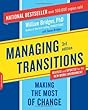
 In Managing Transitions, William Bridges (Ph.D.) writes about the emotional impact of change and suggests that before people accept change they need to go through the emotional phases of transition: grieving the ending of the previous "normal", a chaotic empty neutral zone, followed by a willingness to come to terms with the "new normal".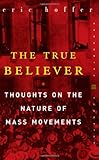
 Hoffer's book The True Believer talks about a situation in which people embrace radical change: the mass movement. He analyses the motivations that cause people to seek massive change, and explains that it is people with poor self-esteem that initially support mass movements, and that for them their membership in a movement is more important than the goals of the movement.
 Posts
Posts

