Tag Cloud      TLA      About
Saturday, May 30, 2009

2009 Stanley Cup Penguins

For related posts, also see : Stanley Cup Game Seven, and Good News, Jobs Well Done

The following image is presented as a public service. I'll explain later.


Yinz Love Sports References, N'At

Here's what's important: Friday morning, I go see a doctor, a specialist, an experienced and eloquent gentlemen. There's a reason I'm going to see him -- it's important, but not melodramatic. There 3.2 gazillion people that are worse off than I am. The good Doctor (and he's a very nice man, a very smart person, and I'm truly lucky to have him on my side) looks at my charts, makes a few notes, and says to me: "It's just like Crosby says, you know..."

Who the hell is Crosby? Bing Crosby? I look at this good and learned physician, I think about his age and my age, and I think he must have said Cosby, Bill Cosby, and I start trying to figure it out. What does Cosby say? Education is important? Pudding is good? I'm replaying Cosby records in my mind, Fat Albert, little children saying "I don't know", and it's going no where for me. I just don't get it. His message did not get to me, I can't decode it, which concerns me because I need to understand what this man is telling me.

"Cosby?", I ask. "Bill Cosby?"

"No. Not Cosby, Crosby. Sidney Crosby. You know what he says." (I can't bring myself to capitalize the H in He.)

"I'm sorry", I say. "Help me out on this, Doc. What does Crosby say?"

"Play like it's the third period." The doctor gives me a knowing grin. I realize this isn't going to get any better. I grin foolishly and move on. I ask a lot of questions, he gives me answers and explanations, and I come away confident I've understood the essence of it.

Desperately Seeking Translation

I have a colleague named Jen who's a hockey fan, and I believe that Crosby is a hockey player. I say to her, Crosby is a hockey player, right? She gives me a look somewhat akin to, Is the Pope Catholic? "World's best hockey player, except for Youghaghenny Malkin", she tells me. I really dislike having to do this. I ask, How many periods in a hockey game? "Three periods", she tells me. I realize this is bad news. I thought there were four periods in a hockey game.

If there were four periods in a hockey game, then the Doctor's anecdote means: it's time to pay attention to this. Nothing extraordinary, respond in moderation, no big thing. But if there's only three periods in a hockey game, then the Doctor's anecdote means: "This is the time. Win it or lose it. Don't leave anything on the ice. You should be hearing footsteps. Buzzer's coming.". I hate that hockey only has three periods.

I am somewhat dismayed that we can't communicate in Pittsburgh without sports metaphors. You have to know what the announcer's routine punchlines are — and here's the thing, in most cities, punchlines aren't routine - that's why they're punchlines. Only in Pittsburgh do people get paid to repeat once-popular phrases. The cultural embrace of sports metaphors is, I know, an unfortunate fact of life in the Burgh. And when in Rome, do as the Yinzers do.

I don't think this happens in other places. For instance, if you see a Doctor in Charlotte, NC, I don't think he's going to say: "Take two pills every Jeff Gordon; if you're not feeling better in a Jimmy Johnson, call the office. (Translation: two pills every 24 hours; if you're not better in 48 hours, call the office). I'm also sure the Doctor doesn't break bad news by saying, "Son, they're waving the surface flag at you. Jethro you ain't gonna last no longer than a Hardee's ham-n-egg biscuit on two-for-one Tuesday.

Obscure Pittsburgh-Charlotte Joke: When USAir, PSA, and Piedmont were merging, the flight simulator staff used to say, How can you tell what airline the last simulator pilot was from?
  • USAir pilot: styrofoam coffee cups everywhere
  • PSA Surfer-Dude: sand on the floor from his chart bag
  • Piedmont pilot: boogers on the IDENT button
(IMO: Piedmont was a great airline, and I'm sorry that USAir's cool northern efficiency happened to the airline that Tom Davis built.)


Hockey's Attraction


2009 Stanley Cup In Context

I don't go out with my wife often enough. Last Saturday I got to take her out for dinner. We went to a great Mexican restaurant in Leetsdale. The whole place is captivated by the hockey game. I have food but no utensils; everybody's paying attention to the game. I can't hear our conversation. But it's no slam on the restaurant (which is a great place) -- it's what everybody here does. Generally, I go to restaurants to eat, and this usually doesn't involve the whole place watching television and cheering. I don't get that people cheer for the replays; there's no extra points for the replays. I guess the Penguins won.


This last Tuesday I was very pleased to go to an Honors Ceremony at my son's high school. They present awards and medals to students from the various classes. It amazed me how many people didn't come - there were open seats, and there's never open seats at this event. The teachers were making jokes about being brief so they could get home for the end of the hockey game. Parents were sitting there wearing earbuds, with headset wires sneaking into their jacket pockets so they could listen to the Penguins on the radio. This amazes me. More than one parent said, Shame this happened on a hockey night. O, the tragedy: Brittney won the physics medal, but we had to go get the damned thing on a hockey night! It's more torturous than Schrodinger's cat. The Penguins won that night, too.

Non-Inclusive Exclusive Communication

When I first moved here and recognized the local pattern of sports metaphors, I thought: hey, maybe now I can understand how poor business communication often excludes people. There's a meeting with four men and a woman, one of the guys drops a football metaphor - "time to punt" - the guys all get it, the woman doesn't, she's marginalized and excluded from the conversation. I thought, hey maybe this will help me to avoid communicating with inappropriate metaphors.

In Pittsburgh even the women use sports references. I was in a meeting and we were talking about who would handle a particular project. A professional woman said, "I'm all over that like Polamalu. I'm left thinking, when did we get a new Italian guy?

2009 Stanley Cup Planning Schedule

At the beginning of this post, I presented the 2009 Stanley Cup schedule as a public service, and I repeat it below for the same reason - so you can plan your dinner dates. If you're taking a date out for dinner on any of these nights, you may have to recalibrate your expectations for a quiet romantic dinner. It's not going to happen.
Get in the fast lane Grandma, the bingo game's ready to roll!
Friday, May 29, 2009

G-20 and the Pittsburgh Airplane Geek


So: The G-20 are meeting in Pittsburgh in September. (BBC, Xinhua).
People see the world through their own interests. If you stop at a gas station for directions, they'll tell you to go straight ahead, turn left at the Exxon, turn right at the BP, and you're there. Stop at a ginmill for directions, they'll tell you to bear right at the DewDropInn, hang a left at Stan's Jungle Lounge, and you're there.

Hello, my name is Vannevar. I'm an airplane geek. For instance, this is a picture of a B707, B717, B727, B737, B747, B757, B767, and a B777 all lined up at Boeing Field in Seattle. It's a plane geek's fantasy.


Here's a G-20-something story that happened 26 years ago, back when it was only the G-7. (Today is the anniversary of this story.)

On May 29, 1983, President Reagan hosted the G-7 meeting in Williamsburgh, Virginia. All the VIP aircraft were parked at nearby Langley Air Force Base. I lived just outside of Langley's west gate. On the ramp at Langley, there was the US Air Force One, Margaret Thatcher's Vickers VC10, and Francois Mitterand's Concorde. As an airplane geek it was an irresistable opportunity to go see these aircraft lined up.


Along with a few friends, we drove onto the Base (my car had vehicle tags because I was a Navy reservist at the time). We went to the Tower, gave them doughnuts and asked if we could come upstairs; they said "sure" and buzzed us in. We walked up and up, around and around the staircase, and arrived in the control tower to a tremendous view of a lineup of Presidential aircraft. Air Force Security was everywhere.

We had a nice tour of the tower and then took our leave. As we worked our way down the stairs, round and round, we took the wrong doorway at the bottom of the stairs, and we stepped out directly onto the tarmacadam. At that very moment, there was a changing of the security watch at Thatcher's VC10. And what's cool is, at the moment the oncoming watch presents itself, they all simultaneously slide the ammo clips into their M16s. So we tumble out on the ramp where we're not supposed to be, lots of people look up and realize that we've just penetrated their secure area, and then we hear the squad's M16s all go "click" in unison with that very distinctive sound. It was kind of a focused moment.

We all froze, security questioned us, and all of a sudden the fact that we brought doughnuts (Krispy Kremes, even) wasn't as significant as it might once have been. They confirmed our story - a couple of tower visitors that took the wrong turn - and escorted us off the base. But it was a great chance to see those planes. I think I still have a picture of the planes.

When I think about the G20 in Pittsburgh, my mind races to: Think of the airplanes that will be here!

This link provides the following list of aircraft types that recently flew into London for the March 2009 G20 summit. (thanks Nino)
Argentina - Aerolineas Argentinas Airbus
Australia - B737-BBJ
Brazil - A319CJ & a B732 (I expect they'd bring an Embraer)
Canada - CC-150 (Airbus 313)
China - Air China B744 (the C919 won't be ready)
Czech Republic - Airbus 319CJ
Egypt - Airbus 342
France - Airbus 319CJ
Germany - GAF Airbus 313
India - Air India B744
Indonesia - Airbus 333
Italy - Airbus 319CJ
Japan - JASDF B744s
Mexico - B752
Netherlands - Fokker 70 (that's a medium-sized Fokker)
Russia - Il-76, Il-62s, Il-96s & three Tu-154s
South Africa - B737BBJ ZS-RSA to LGW
South Korea - Asiana B744
Spain - Airbus 310
Thailand - B734
Turkey - Airbus 319CJ

If that's any indication, there's going to be some awesome airplane spotting opportunities in Pittsburgh in September. If your camera looks anything like the photo at the right, please stay home.

It would be extremely cool to see the Airbus A380. It would be a chance for the Euro-partners to highlight their flagship, but I'm not sure that's a priority and I don't imagine that Emirates is lending them out.


Monday, May 25, 2009

Netroots Nation 2009 - NN09 - here in Pittsburgh August 13-16, 2009

Netroots Nation 2009 (NN09, for the cognoscenti) will be meeting here in Pittsburgh, August 13-16, 2009, as mentioned in this press release.


(Politics is not my beat, but this is Pittsburgh1 Geek2 & Web3 politics, so...)

This is the fourth annual edition of this event, originally called the YearlyKos Convention, and rebranded as Netroots Nation in 2007.
Netroots Nation 2009 will include panels led by national and international experts; identity, issue and regional caucuses; prominent political, issue and policy-oriented speakers; a progressive film screening series; and the most concentrated gathering of progressive bloggers to date.

Netroots Nation is committed to fostering a legacy of environmental stewardship. We believe we have a responsibility to not only green our event, but to use our gathering to educate others about sustainability issues. Netroots Nation 2009 will be held at the first and largest certified “green” convention center in the world (Gold LEED certified) and will incorporate green practices such as minimizing waste and donating leftover food to reducing our greenhouse gas emissions as much as possible.


NN09Here's a NY Times article about NN08 and the struggle for the soul of the Democratic Party between the DLC and the Netroots. Heady stuff. (Also: a list of Wordpress blogs about Netroots Nation 2008.)

Accept for discussion, if you will, the notion that the introduction of a large mass of activist web-grokking Progressives (Progressives 2.0 ?) from beyond the 30-mile circle is likely to produce some impact on the local political scene. For instance, this article talks about the remarkable fundraising impact of out-of-town Netroots conventioneers affecting a Congressional election.

Questions include:
  • Netroots Nation is a direct challenge to the hegemony of legacy political machines. What's the impact of celebrating Netroots Nation and disintermediation in the middle of a 1950's machine city?
  • Who are the Pittsburgh Netroots?
  • What is the impact of NN09-Pittsburgh on Arlen Specter's future?
  • What's the impact of NN09-Pittsburgh on Dok Harris's Indy run for Mayor? On Kevin Acklin's Indy run for Mayor? (kudos!)
  • Is Braddocc (sic) Mayor John Fetterman the local politico who charms them and leaps to a higher stage? (Colbert, Carbon Caps, etc)
  • Where do we expect to see protests and vigils during their visit?
    • If Pittsburgh is Eds and Meds, where is the focus likely to go?
    • UPMC, the non-profit that makes million$?
    • Software Engineering Institute?
    • CMU's National Robotics Engineering Center?
    • hybrid Labor/Eco-Brownfield event at the Homestead Strike site?
    • where else?
    • Does a web-based movement even do physical demonstrations?
  • Is the Convention Center and the downtown WiFi capable of supporting 2000 bloggers?
  • Was it the solar water heater at the fire station that cinched the deal?
Sunday, May 24, 2009

Finished Reading: The Logic of Failure, by Dietrich Dorner

I work on a lot of projects. Projects are different from ongoing work processes because projects have a beginning, an end, and usually a specific observable goal; they have a schedule, a budget, and a set of specifications. Projects can (and often do) go awry. Increasingly, I'm not surprised at the projects that go wrong or hit snags; I'm surprised at the projects that don't go wrong.


A lot of current literature focuses on studying success as a path to improvement. Studying success is like studying how you got to work today to improve your driving record — you can't learn much about the non-specific events that didn't happen. Maybe your success was just a fluke. Maybe it has nothing to do with the reasons that you attribute to it. Maybe the success was in spite of the you, not because of the you. Maybe it wasn't your day to die.


The subtitle is: "Recognizing And Avoiding Error In Complex Situations". That's something I can use help with.

The notion of this book (which I really enjoyed) is that too many people study success, when the real opportunity for learning comes from studying failure. Dietrich Dorner suggests that by studying failure, by spotting patterns of failure, we might be able to restrain ourselves in similar situations.

This was a good read and I recommend it. It took me a while to read because there's a lot of food for thought in there.


He opens by talking about not defining goals, not defining success, and not making explicit priorities as factors in failures. He shifts from theory into praxis by presenting results from simulations in which people fail to handle complex, multivariable, time-lagged situations.

Dorner talks about the behaviors people present (choose?) when faced with situations. He identifies several coping mechanisms which are indications of future failure, and suggests that the choice of response is a choice of coping mechanism, which in term is a choice of self-protective behavior.

The book explains how the native human ability to deal with time-dependent systems is minimal, how we tend to see individual events rather than ongoing process and patterns, and how we are prone to identifying single causes in multivariable situations.

This might have gotten pretty dry pretty fast, but it didn't. The examples provided are interesting, and his writing style is enjoyable and witty.


There were a few points which were thought-provoking for me. Dorner talks about
  • falling into a "repair service mentality" where we respond to immediate events without considering the underlying cause.
  • maximizing "diversity efficiency", by which he means preparing for multiple opportunities to respond.
  • reverse planning in an interesting way
  • the context-sensitivity of planning, and quoted Clausewitz as defining strategy as "planning in context"
  • "methodism" — the use of a previously accepted method without consideration of contemporary context. He sees it as a flawed response.


He recommends:
  • seeing events as the results of a time-delayed process rather than unique incidents
  • observing and studying before acting
  • anticipating the time latency of actions taken.
  • learning to think in terms of temporal configurations.


In a way, the proscriptive concept of this book - studying failure to learn what to avoid is more productive than studying success - is consistent with another book I've recently read, What Got You Here, Won't Get You There. The specific notion of W-G-Y-H-W-G-Y-T is that instead of learning new behaviors, it may be more productive to unlearn bad or inneffective behaviors, or the DDT's (Don't Do Thats).
Saturday, May 23, 2009

Who is the Pittsburgh Person?

A corporation is a legal entity separate from the persons that form it. Similarly, a city is a legal entity with power, rights, obligations, personality, and quirks.

The good folks at Pittsblog 2.0 have a great post about Pittsburgh blowing things up and suggesting that if Pittsburgh were anthropomorphized, it would be an stereotypical young boy, fascinated by loud noises, trucks, things crashing into each other, and himself. (I couldn't say it any better). The boy's hairstyle is uncertain, but we know his uncle wears a mullet.

The question fascinates me. Who would Pittsburgh be, if Pittsburgh were one person? I think we need to be more rigorous. First, let's define Pittsburgh. For our purposes Pittsburgh is both the City Of Pittsburgh and Allegheny County, removing for this discussion an ambiguity which should also be dealt with in the real world. (pace illyrias)

What are the attributes that this Pittsburgh Person would demonstrate?

  • Very Good with technology
  • Very Good with medicine
  • Parochial perspective
  • Mediocre in elementary schools, excellent in college
  • Budget problems temporarily solved with one-off workarounds, not filling the 401K
  • Cognitive Dissonance
  • Lots of competing voices in their head
  • Simultaneously a Used-to-Be and a Wannabee with an inferiority complex
  • Widely dispersed network (the diaspora)
  • Family oriented
  • Has supported non-profits to the point of regretting it
  • Loves and supports sports teams. Confuses self-identity with team marketing.
  • Tied into old relationships and neighbors that may hamper personal growth
  • Handles loss and adversity well
  • Believes they are quite distinct from indistinguishable peers (Cleveland, Buffalo, etc)
  • has a great model airport, but no planes


Who is the Pittsburgh Person? A few real people come to mind. Tom Murphy, Jane Pitt, Franco Harris, Sophie Masloff, Myron Cope - they all convey a large portion of the Pittsburgh zeitgeist, the Burgh spirit in our times.

I'm not sure who the person is that meets this profile, but I'm going to work on it. It's not Yarone Zober, Dennis the Menace, or Angelina Jolie. In fact, I'm not sure that any real person would fit the profile.


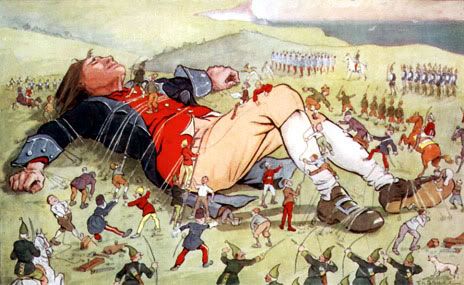
I thought about Gulliver, the giant who's potential is hamstrung by too many tiny factors, but there wasn't enough there to support his candidacy.

Our Pittsburgh Person is a bit of a schizophrenic, possibly a high-functioning schizophrenic.

It strikes me that Edward Norton's unnamed character in the movie Fight Club might be our Pittsburgh Person. He struggles. He fights. He has internal conflicts he's barely aware of. He's got to kill off Tyler Durden before he can get himself on track.


Looks like Pittsburgh to me.
Tuesday, May 19, 2009

Experience and Karl Popper's Three Worlds

Sir Karl Popper is a philosopher of science and a student of the scientific process. He describes science through an ontology of three worlds, as shown below. World-One is the physical realm, World Two is the realm of subjective reality, and World Three is the realm of objective knowledge.


The worlds are positioned so that only the first two and the last two can interact; World One and World Three cannot interface except through the intermediation of World Two.

World Three contains our accumulated scientific knowledge, which is enshrined in (but does not consist of) the devices that store it.

Popper maintained that the activity of understanding consists of operating with World Three objects, and described World Three as an arena where linguistically formatted theories can be critically discussed.

World One : The Physical World

Let's say that there's a balloon in your house. You, the balloon, and the house are in World One, the physical world. You observe the balloon through the morning and afternoon. As the day continues, the balloon gets bigger and bigger. You measure the balloon and keep track of the results. This data, these measurements without interpretation, are in World One.

TimeBalloon Size
08:00 AM12 inches
09:30 AM12.5 inches
11:00 AM13 inches
1:30 PM14.5 inches


World Two : Subjective Reality

You wonder about this. What's going on? Your thinking takes place in World Two, the world of subjective reality. Opinions, assumptions, and perceptions abound. As you think, you decide to analyze the measurements:
TimeBalloon SizeElapsed TimeChange in Size
08:00 AM12 inches00
09:30 AM12.5 inches1.5 hours.5 inch
11:00 AM13 inches3 hours1 inch
1:30 PM14.5 inches4.5 hours1.5 inches

And you develop a graph of the data:


You develop a theory: the size of the balloon increases with time. This is not a bad theory; it explains the observed phenomena. You develop a formula to explain the relationship: Growth(inches)= Time(hours) / 3. You're still working in World Two. You feel very good about this.

World Three : Objective Knowledge


You decide to involve others in your thoughts; you'd like to have your findings recognized and accepted. You branch out from World Two (subjective reality) and tentatively step into World Three (objective knowledge). You contact several friends, explain your data and your theory. You introduce your theory to World Three.

Your buddy Ralph, ever the naysayer, says "I can't disagree with your findings. The value of a good theory is its usefulness to predict. Tell me: what size will the balloon be at 3:00 pm? You look at your chart and your formula, and say quite confidently, "At 3:00 pm, the balloon will have grown another half-inch, for a total growth of 2.0 inches, and a total size of 14 inches."


At 3:00 pm, you measure the balloon and your prediction was right on. You nailed it. You notify your associates, and they congratulate you on your new Law of Science. You publish your results and the New Law of Science for the world to use and benefit from. You've increased our knowledge of the universe. MaryLou, however, remains a skeptic. "I don't think you're right, but I can't prove you're wrong."

You decide to offer MaryLou some food for thought. You say, "Listen-- At 4:30 pm the balloon will be 14.5 inches inches, and at 6:00 pm the balloon will be 15 inches. You'll see."


Past Behavior is no Guarantee of Future Performance

At 4:30 pm, you measure the balloon, expecting it to be 14.5 inches, and find that the size has decreased to 13.5 inches. At 6:00 pm you measure again, hoping that the balloon is back on track, and you see that the size has decreased to 13 inches.


You notify your friends, share the numbers, and tell them that your new Law of Science has been disproved (falsified). Mary Lou consoles you, "It was a good theory; it explained the known phenomena. Something else must be going on. We'll figure it out". Your proposed theory is banished from World Three.

The next day Barry calls the group with a new theory. He's working in World Two. He suggests that it wasn't the passage of time, but instead it was sunlight that made the balloon grow. (It got real cloudy after 3:00 pm.) He builds on the previous process, develops a new theory, and it passes his initial test.

He sends it into World Three by publishing his data and theory. Others run the experiment at their house, and they're able to duplicate his results. Nobody is able to disprove it. Barry's Law is accepted into World Three, at least until such time as somebody can disprove it.

Karl Popper's Philosophy of Science


Karl Popper said this process of Falsification within Three Worlds is the essence of science. World One presents events and phenomena. World Two develops personal concepts. World Three rejects falsified concepts and accepts other concepts until such time as they are falsified. Science includes the test tubes and experiments, but it's fundamentally about publication, review, acceptance, and falsification.

Popper described science as an evolutionary process in World 3, in which scientists offered bold conjectures to explain phenomena and the community refuted or accepted them. He describes knowledge through the interrogatives:
"In seeking pure knowledge our aim is, quite simply, to understand, to answer how-questions and why-questions. These are questions which are answered by giving an explanation. Thus all problems of pure knowledge are problems of explanation."


Experience and Popper's Three Worlds


We thank the Dear Reader who is still with us. What does Experience have to do with Popper's Three Worlds? Let's go back to the Venn diagrams and remember the constraint: World One and World Three cannot touch; they must be integrated through World Two. What would the Venn diagrams look like for the various combinations of Experience and Knowledge?


No Experience, No Knowledge

What would the chart look like for a person with very practical experience, and very little contact with the body of objective knowledge? The thing that jumps out of this chart to me is that there's he's got a lot of himself, and not much else.


Good Experience, No Knowledge

This is a person who knows the physical world, but isn't going to benefit from any of the common body of objective knowledge.


No Experience, Good Knowledge

This is a person who understands objective knowledge, but has no experience in the physical (real) world; academics and theorists come to mind.


Good Experience, Good Knowledge


This is a person who knows the world and knows the body of objective knowledge. The thing that jumps out of this diagram for me is that the person doesn't get in his own way. This seems a valid representation of most competent people I know.


My take-away is: Experience Matters.


click here for a Karl Popper cartoon.
Friday, May 15, 2009

Cougar Zero

I don't generally watch TV, with the one exception of The Office, which has become a family ritual. Wednesday morning I found myself in a Doctor's waiting room, and there was a news show on the television with a feature segment on "Cougars". Graduates of the H.L. Mencken School of Old School Journalism will be pleased to know that the newsroom team really did a great job on this hard news story.


The reason for the news show on Cougars is that the trend has escalated to the point at which it reaches mainstream endorsement: the introduction of The Cougar, a television series exploiting exploring the phenomenon.

A Cougar, apparently, is a financially successful "older woman" who enjoys the company of younger men. This is apparently something to be celebrated and shown to children on Wednesday evenings - but after a show called Wife Swapping became mainstream, who's to say?

The nominal focus of the Cougar television show is a 40-year old woman, a mother of four, and a successful realtor in Arizona. Fact Check Opportunity: Are any realtors in Arizona successful right now? I wouldn't think so.

Sidebar: We put shows like this on TV, we beam them around the world, and then we wonder why Ahmadinejad (the little guy who can't figure out a necktie) thinks we're a decadent society.

Ostensibly, the cougar mindset is motivated by their own interest, and they have the means and the social acumen to acquire it. They're after what they want, and they make no apologies for it. (More on that later.)

We must point out that these putative Cougars have merely attained what some men have been accomplishing for a long time. We have a name for them, too -- lechers.

Objections:
  • I don't find the age differences unsettling, and I don't care which gender is older. I do find the economic and power differences disturbing. I'm not sure that a relationship between a wealthy 40-year old with a hungry 20-something can be said to be truly a matter of choice, any more that Sally Hemings (the slave) was free to choose a relationship with Thomas Jefferson (the president and her owner). I agree with Catherine Mackinnon's assertion that consent is "free exercise of choice under conditions of equality of power"
  • Why do we support entertainments that encourage unacceptable behaviors? How do we set our families in front of shows with youngsters competing for sexual attention, how do we objectify junior, poorer people, and then act surprised at sexual harassment?

So this is a trend, it's a new vehicle for titillating television, it's sensational and applies to base instincts (so it's going to be successful), it's a way to get people to watch advertising. Check, check, check. It's sweeping the globe. It's the hot new thing. How do we Objectively come to grasp with this phenomena? How would we approach this if it were, in fact, a social situation sweeping the globe? We would take these steps: --
  • define the phenomena
  • identify the environs
  • track the pattern
  • identify Patient Zero


Defining the Age Range of 'Normal' Relationships : The Formula


There is a formula used to describe the acceptable age range for relationships in Western society. I don't know who made this formula. The specifics are that the younger person's age has to be at least half of the older person's age, plus seven. This results in the following chart of acceptable age ranges:

A relationship outside of these boundaries, with a woman as the older partner, is considered a Cougar relationship.


The Environs: Where Does The Cougar Phenomenon Happen?


I'd like to suggest this is a trend out of Hollywood, both in terms of movie industry people and movie industry products. I don't believe this happens much in Youngstown or Buffalo. You'll see this among "actual" movie people such as Demi Moore and Ashton Kuschner, and among movie characters such as Jeanine Stiffler (American Pie), Mrs. Robinson (The Graduate) and Norma Desmond (Sunset Blvd).


Patient Zero Cougar Zero

Identifying Patient Zero in an epidemiological study is the Holy Grail. Researchers believe they know who Patient Zero was for HIV/AIDS, and for the recent 2009 H1N1 Flu. Who was Cougar Zero?


Who Was Cougar Zero?

Ayn Rand (born Alisa Rosenbaum, 1905, in Russia) was a successful Hollywood script writer. She wrote stories about strong individuals within a perspective of rational egotism, or rational selfishness, and laissez-faire capitalism; her movie scripts include The Fountainhead and Atlas Shrugged. She did not support God, religion, or social obligations. Her writing, to some extent, provides the intellectual basis of today's Libertarian Party.

Although readers enjoy her books, her beliefs fall short of philosophy. She was a Hollywood script writer with money and a circle of admirers. Considering her a philosopher (or a role model) is like hoping your children grow up to emulate Madonna or Shirley MacLain.

Rand developed a coterie of followers in New York City that called themselves The Collective. Rand and a young graduate student (25 years younger) named Nathan Blumenthal (he later changed his name to Nathaniel Branden) became close. Although they were each married to other people, Rand is said to have coordinated approval for their affair among the spouses, asserting to his wife and her husband that it was in their financial interest to support her assignations. This unconventional arrangement was completely consistent with her philosophy of economic self-interest.

Although there have certainly been Cougars throughout history, in our modern times I believe that Ayn Rand is Cougar Zero. She should be the spokesperson for Cougar Zero, canned bourbon and diet soda sold in Australia by Foster's.

I'd like to make this point: I don't disapprove of Ayn Rand because she had an affair. People make mistakes; people fall short of their beliefs. It's not that. I disapprove because this was not a mistake, but rather the arrogant, inevitable conclusion of her selfish psuedo-schlock.

Let's review the Cougar perspective and see how Ayn Rand matches up with it. Earlier I wrote,
Ostensibly, the cougar mindset is motivated by their own interest, and they have the means and the social acumen to acquire it. They're after what they want, and they make no apologies for it.

There's been a real focus on Ayn Rand and "Going John Galt" lately. I think that before anyone follows John Galt, they should take a good look at his mother.